London Family Office Conference 2026: From uncertainty to strategy
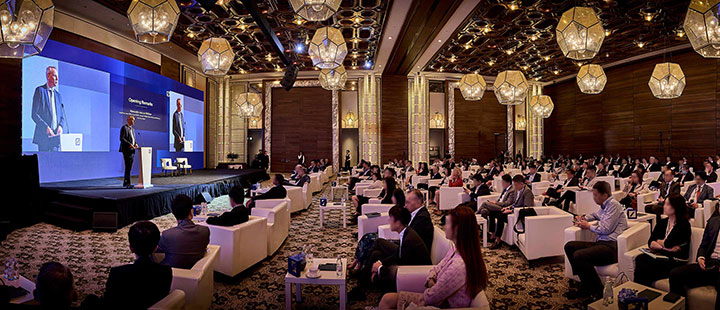
Delegates convened at Deutsche Bank’s London headquarters for a fascinating day of networking and insights spanning geopolitics, macro forces, and long-term prospects.
Uncertainty continues to weigh on investors’ minds. From persistent geopolitical tensions and renewed questions over security to a macro backdrop shaped by inflation, growth dispersion and volatile energy markets, family offices are operating in an environment where strategic clarity is crucial.
This was a central theme at Deutsche Bank’s Family Office Conference held in London in June 2026 where we welcomed around 200 guests from the family office ecosystem. Across a programme spanning macro and markets, geopolitics and stability, and the implications of AI and advancing technologies, experts from across the bank and distinguished guest speakers examined how families can position portfolios for resilience while remaining alert to long-term sources of potential opportunity in a fragmented world.
Salman Mahdi, Global Vice Chairman of Deutsche Bank Private Bank, opened as master of ceremonies, while Arjun Nagarkatti, Head of Private Bank – US & Europe International, set the scene for a day focusing on what rising complexity means for capital allocation, and how family offices are well-placed to respond with discipline, adaptability and long-term perspectives.
Investors are facing many risks in the current landscape and many more emerging on the horizon. As Nagarkatti emphasised, clarity of thought will be vital in responding to the uncertainty ahead.
Macro and markets: navigating a paradigm shift
In a wide-ranging session, Christian Nolting, Global Chief Investment Officer of Deutsche Bank Private Bank, and Jim Reid, Global Head of Macro and Thematic Research at Deutsche Bank Investment Bank, explored the macro backdrop for 2026 and beyond – from inflation and energy prices to growth, productivity and the implications for asset allocation in a more volatile environment. According to a poll held on the day, roughly half of attendees identified geopolitics as the biggest risk to portfolios, followed by economic slowdown, and inflation.
The discussion underlined that while geopolitical risk is shaping sentiment, investors still need to look beyond immediate headlines and identify where future growth may develop.
Emerging winners in a changing world
British economist Lord Jim O’Neill, known for coining the term BRIC (Brazil, Russia, India, and China), shared reflections on the shifting map of global growth and competitiveness, and on what it takes to build long-term winners as economic power and innovation diffuse across regions. He highlighted how globalisation was very much alive in the East, despite some Western perceptions that international economic integration is declining.
In conversation with Christian Nolting and an audience Q&A, the focus turned to practical implications for portfolio construction, thematic investing and risk management, as well as the value of ignoring short-term distractions to focus on long-term goals.
In a more complex world, this “patient capital” ethos may be among the most valuable characteristics at a family office’s disposal.
Geopolitics and security: Europe’s place in the new world order
General Sir Nick Carter addressed how European strength, security and influence are evolving in a more contested international environment, covering the changing character of conflict and what this could mean for business and investors.
In the panel discussion that followed, moderated by Salman Mahdi and featuring Dr Helen Belopolsky, Global Head of Geopolitical Research at Deutsche Bank Research, a few themes stood out: the growing importance of global and energy security, the extent to which a series of crises has exposed Europe’s strategic complacency and vulnerability, and the need for investors to treat geopolitics as a material input into long-term planning and not as background noise alone.
Without greater political will and structural change, it was suggested, Europe risks falling short in responding effectively to a more volatile and competitive geopolitical order. Nevertheless, poll results showed that interest in Europe remained strong among participants, with most saying they were either increasing or maintaining their focus on the region.
Family office perspectives: building resilience across generations
Three representatives from different leading family offices shared their perspectives on allocating capital across cycles – balancing conviction and diversification, managing liquidity and downside risk, and aligning decision-making with multi-generational objectives, as well as how leverage can be used strategically.
Moderated by George Varoutsis, Head of Investment Management – US & Europe International, Deutsche Bank Private Bank, the panel also explored how family offices are approaching AI with interest in its long-term potential, while questions remain on its implementation and capacity constraints.
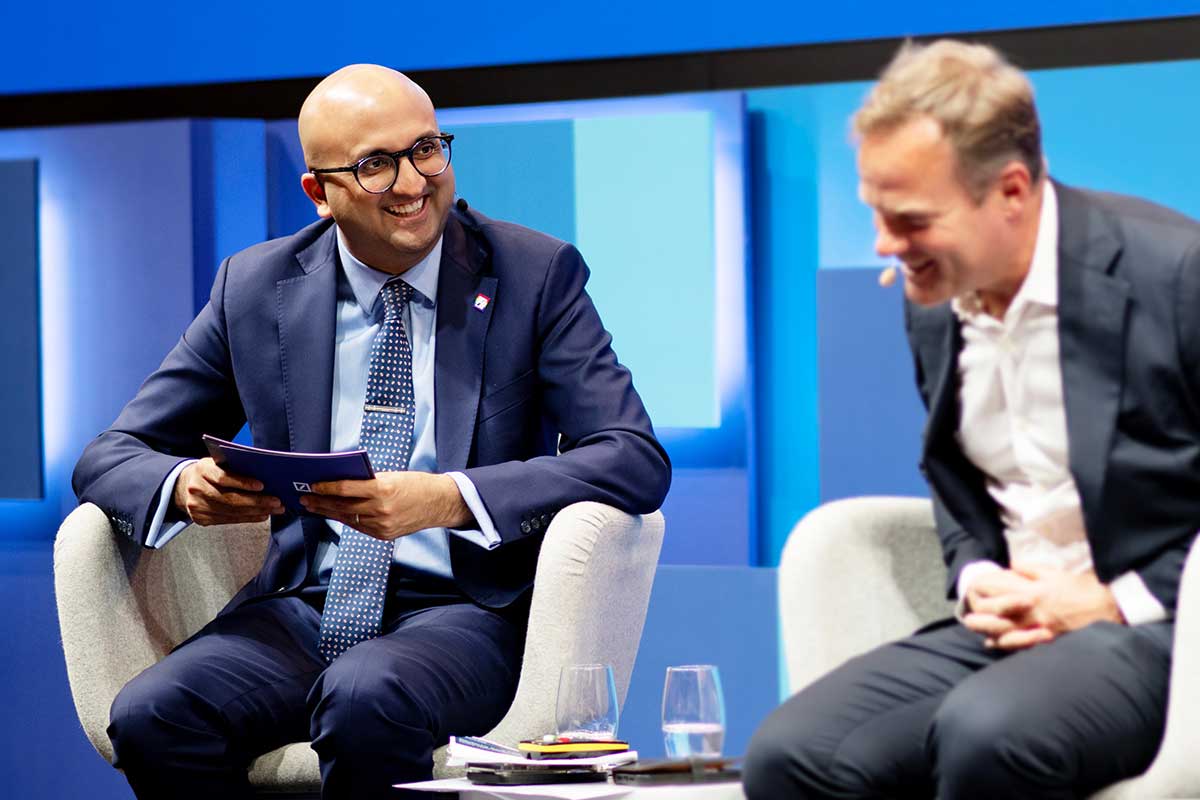
Arjun Nagarkatti, Head of Deutsche Bank’s Private Bank for Central Europe and the U.S., discusses Europe as an investment opportunity with Henrik Johnsson, Co-Head of European Banking and Capital Markets at Deutsche Bank Investment Bank.
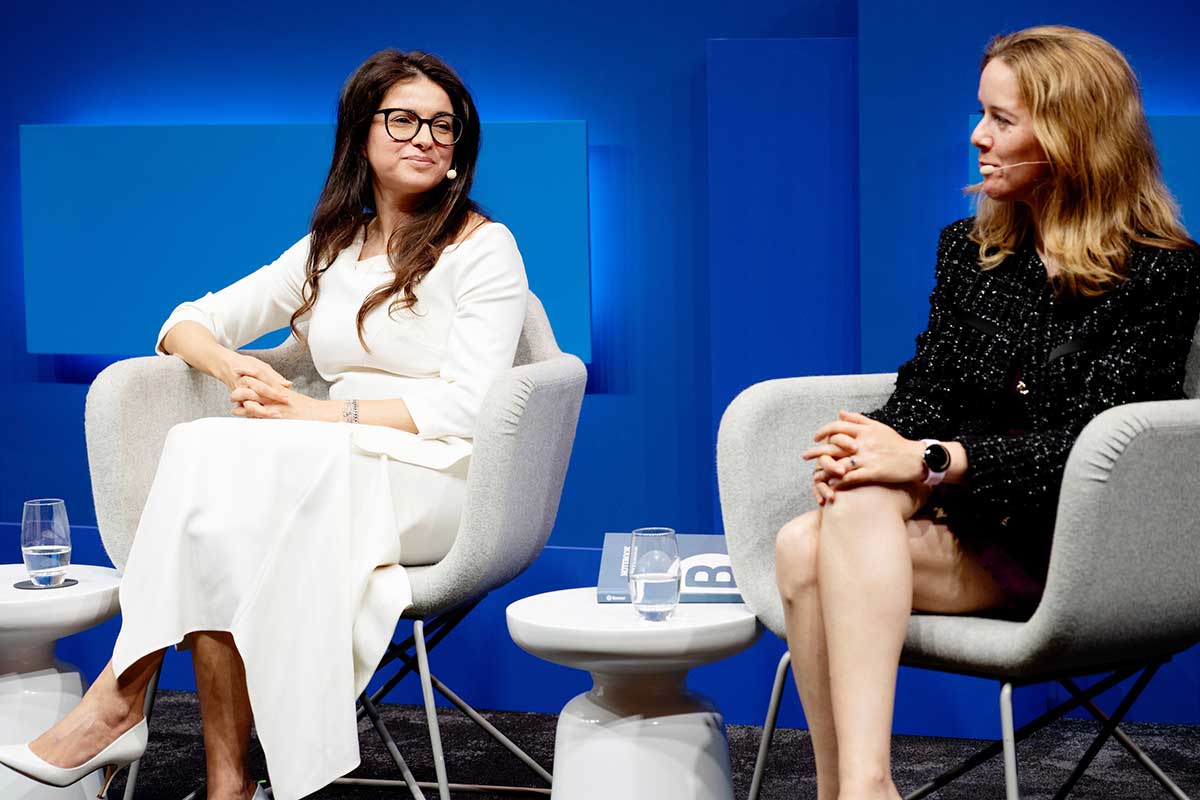
Alice Kletskaia, Managing Director of Re7 Capital, and Marion Laboure, Managing Director, Deutsche Bank Research – Thematic Research, discuss the future of digital assets.
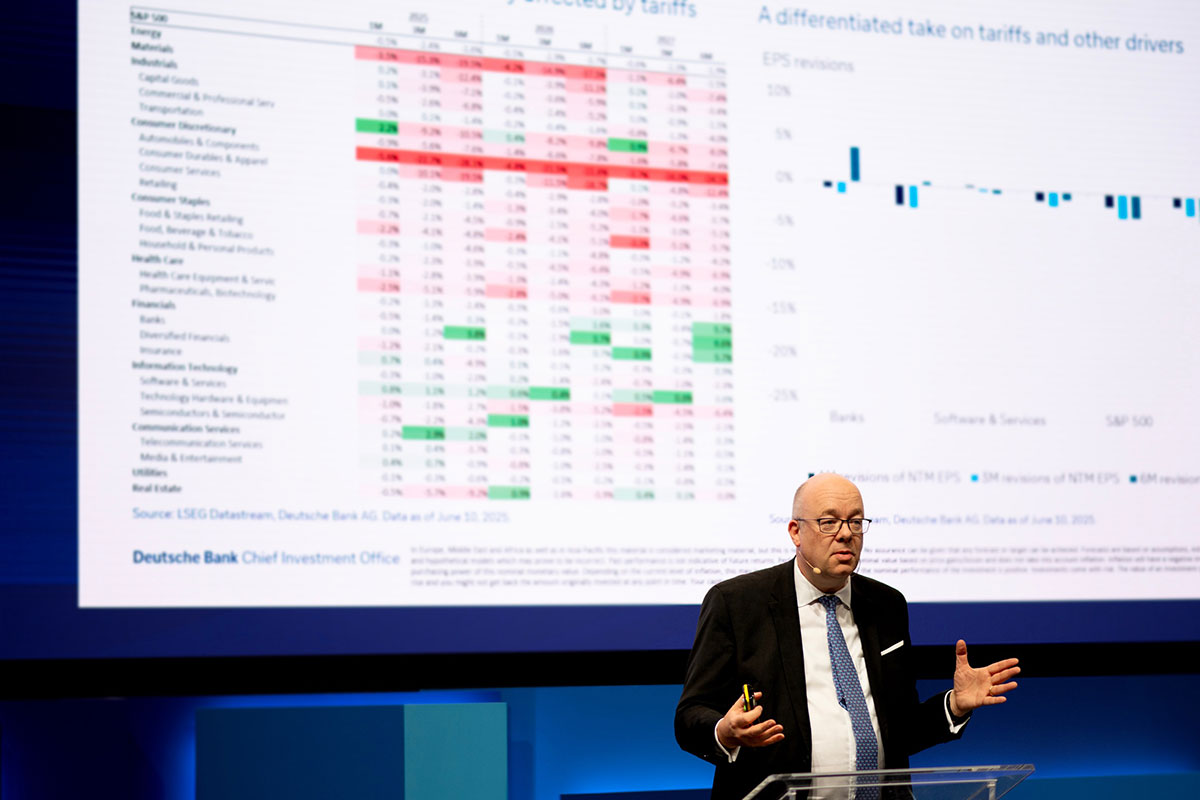
Christian Nolting, Global Chief Investment Officer, Deutsche Bank Private Bank, gives a macroeconomic outlook to the 2025 Deutsche Bank Family Office Conference in London.
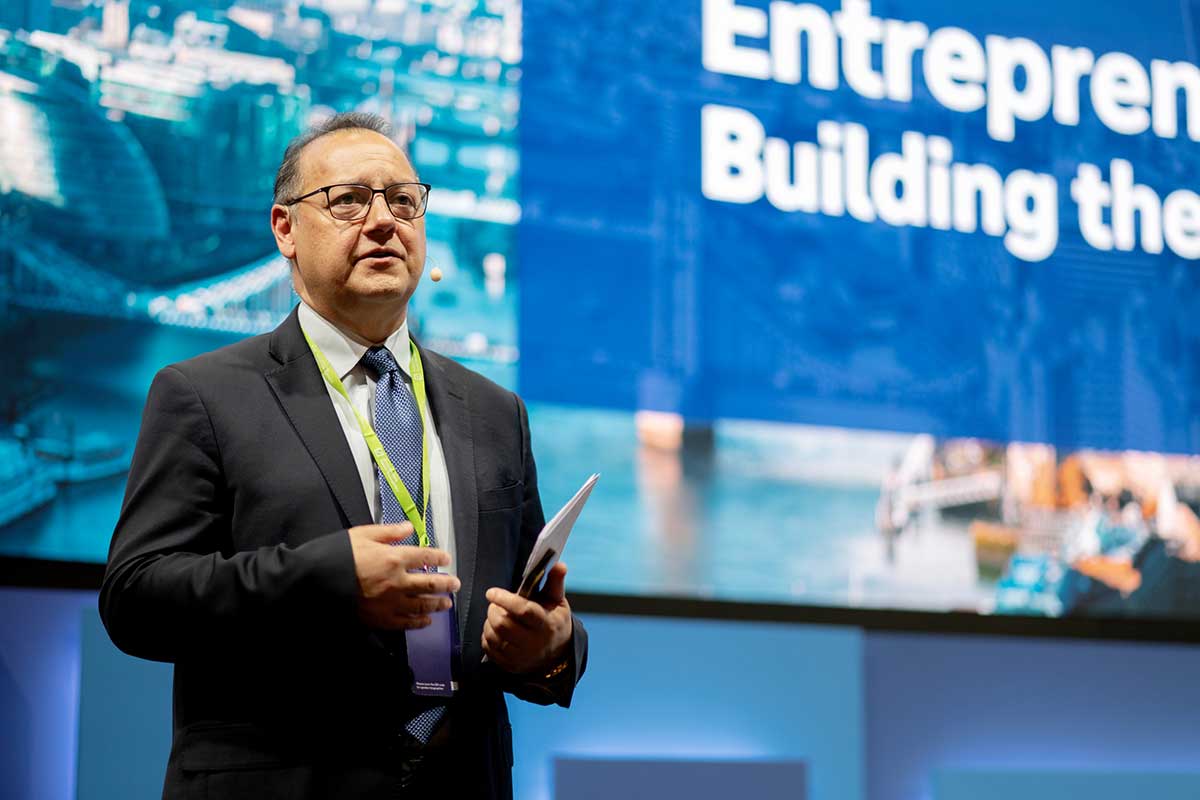
Salman Mahdi, Global Vice Chairman of Deutsche Bank Private Bank, was master of ceremonies for the 2025 Deutsche Bank Family Office Conference in London, which took place at 21 Moorfields, our new headquarters in London.
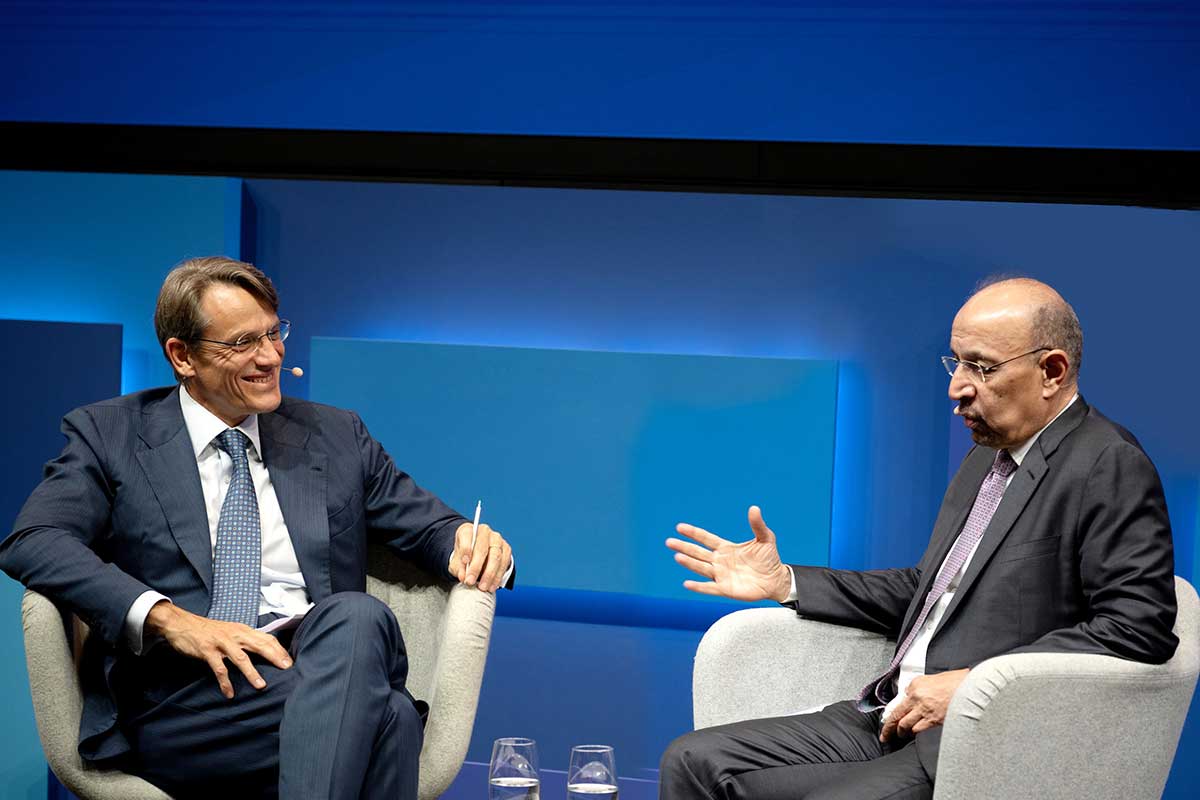
Claudio de Sanctis, Member of the Management Board and Head of Private Bank, Deutsche Bank, in discussion with H.E. Eng. Khalid bin Abdulaziz Al-Falih, Minister of Investment, Kingdom of Saudi Arabia (MISA).
Although a clear message emerged that each family office is unique, a takeaway from the session was the importance of building portfolios and operating models that can adapt as technologies evolve and new opportunities emerge, instead of chasing novelty for novelty’s sake.
Advancing technology: positioning for structural shifts
A recurring theme of the event was the uncertainty surrounding the transformational nature of AI and how it will impact future generations – but rather than shying away from the technology and its broad-reaching implications, representatives of family offices were invited to embrace it.
The conference’s advanced technology session brought together Neil Serebryany, Managing Director, Hyperion Horizons Group, Kumar Shah, Managing Director, Investments Private Equity, Brookfield Asset Management, and Adrian Cox, Managing Director and Thematic Strategist, Deutsche Bank Research, in a panel moderated by Salman Mahdi. They examined how AI could be moving from a thematic opportunity to a foundational capability across both investment processes and portfolio companies; however, a clear gap remains between widespread experimentation and full-scale organisational adoption.
By their nature, family offices can be agile where larger institutions may be limited. The discussion explored AI through a long-horizon lens, focusing on how family offices can position for structural shifts, assess implementation realistically and use their relative nimbleness to respond to technological change, particularly as possible opportunities emerge across the entire AI value chain.
Key takeaways from the Deutsche Bank London Family Office Conference 2026
Against a backdrop of heightened geopolitical strain and macro uncertainty, a consistent theme emerged: family offices should be building resilient portfolios, but that alone is not enough. Christian Nolting highlighted three practical priorities:
- Review the overall risk profile: identify tail risks, position the risk budget carefully and understand how shocks could affect the portfolio.
- Test structural robustness: examine how far strategies depend on uncertain assumptions and balance efficiency with resilience.
- Assess operational resilience: ensure there are clear capabilities around asset allocation, decision-making speed and access to liquidity in stressed conditions.
More broadly, discussions pointed to an investment approach grounded in adaptability: staying close to long-term objectives while remaining prepared for a world in which shocks may be more frequent, correlations less reliable and opportunities more unevenly distributed.
Towards the end of the conference, Nolting outlined several forces likely to shape the decade ahead, including security, resource scarcity, demographics, inequality, market access, and the interaction between technology and productivity – all of which could have implications for how family offices allocate capital across public and private markets.
In a time of increasing disruption, Deutsche Bank’s London Family Office Conference sought to offer useful perspectives on how families can navigate the unknown. Salman Mahdi stated: "It is crucial for family offices to build connections, and these events create an ecosystem for them to do so."
As families contend with complexity, noted Mahdi, Deutsche Bank’s commitment to helping clients identify and anticipate change, while staying anchored to their priorities, is central to building enduring strategies.
In his closing remarks, Arjun Nagarkatti said: "I hope this conference has given you invaluable perspectives on how to manage the uncertainty ahead."
This event was the latest in our series of family office conferences held around the world. You can find out more about previous events, and about the services we offer to family offices, here.
Related events and connections