Click here to activate this content.
The 2025 Global Innovation Summit took place in Silicon Valley in November 2025 with the theme of “Innovation in the age of AI”. It enabled around 100 clients of Deutsche Bank Wealth Management to meet some of the world’s leading scientists, technologists, business leaders and investors over four days of discussion, interaction and Californian hospitality.
Now in its seventh year, the Summit is always a source of exciting news and announcements from leading institutions and private companies. But the speed at which technologies and business models are changing was noticeably greater this year, thanks to the accelerating force of artificial intelligence (AI). “I have a board meeting this week and what we learned at the last one is almost irrelevant,” said one guest speaker Divesh Makan, founder of ICONIQ Capital. “The pace of change in the past three months is like nothing I’ve ever seen before.”
Our attendees learned they need to be flexible – and ready to pivot at a moment’s notice – if they want to make the most of the AI revolution. At the same time, they also need to ignore short-term hype and volatility and be thoughtful about how and where long-term value will emerge.
“Our clients have been left in no doubt that AI is a transformative force in every field of human endeavour,” said Salman Mahdi, Global Vice Chairman of Deutsche Bank’s Private Bank, who has hosted the event since its inception. “To grasp the opportunities in this space, you really need to make it your business to learn all you can, and that’s exactly what we got the chance to do here this week, from the very best thinkers and practitioners in a variety of fields.”
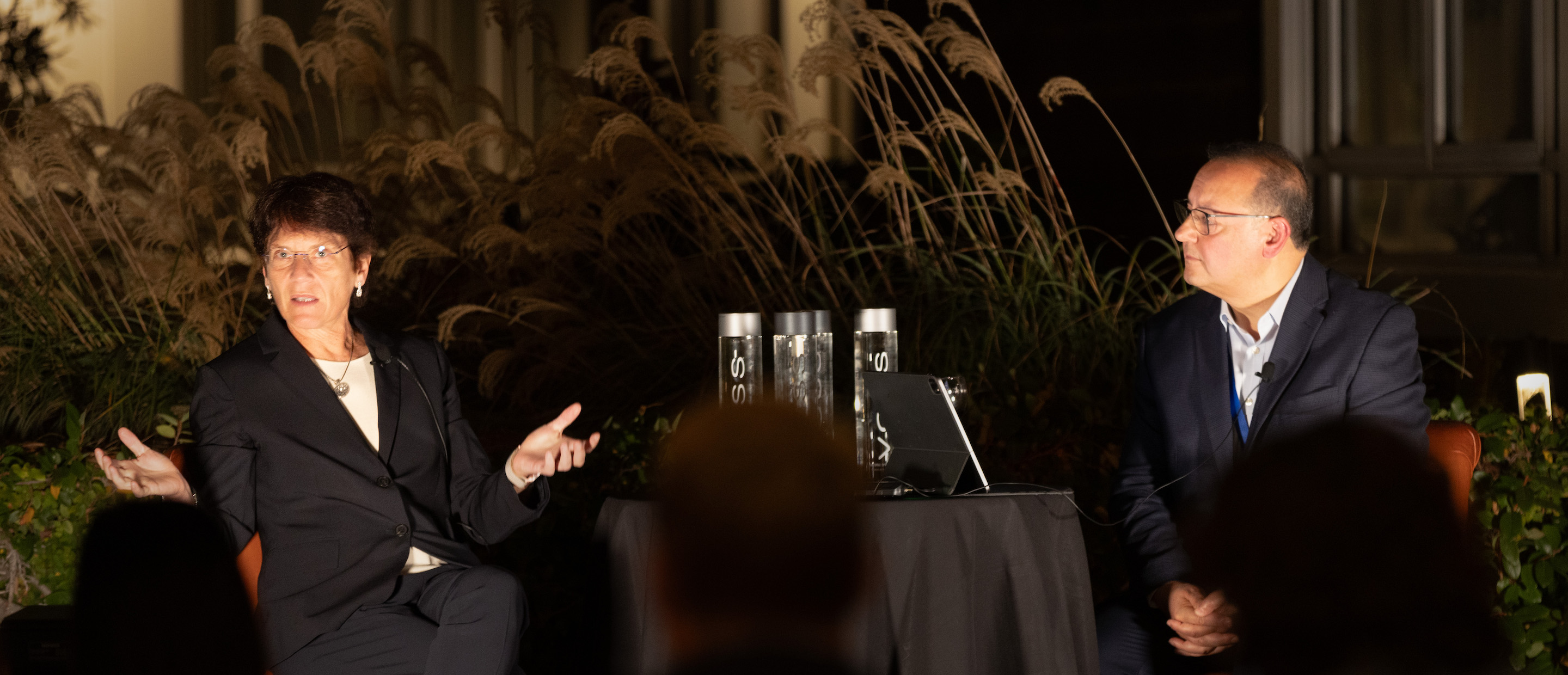
Professor in the School of Humanities and Sciences and Professor, by courtesy, of Chemical and Systems Biology and of Radiology, Stanford University, Nobel Prize Winner in Chemistry 2022 and Salman Mahdi, Global Vice Chairman, Deutsche Bank Private Bank.
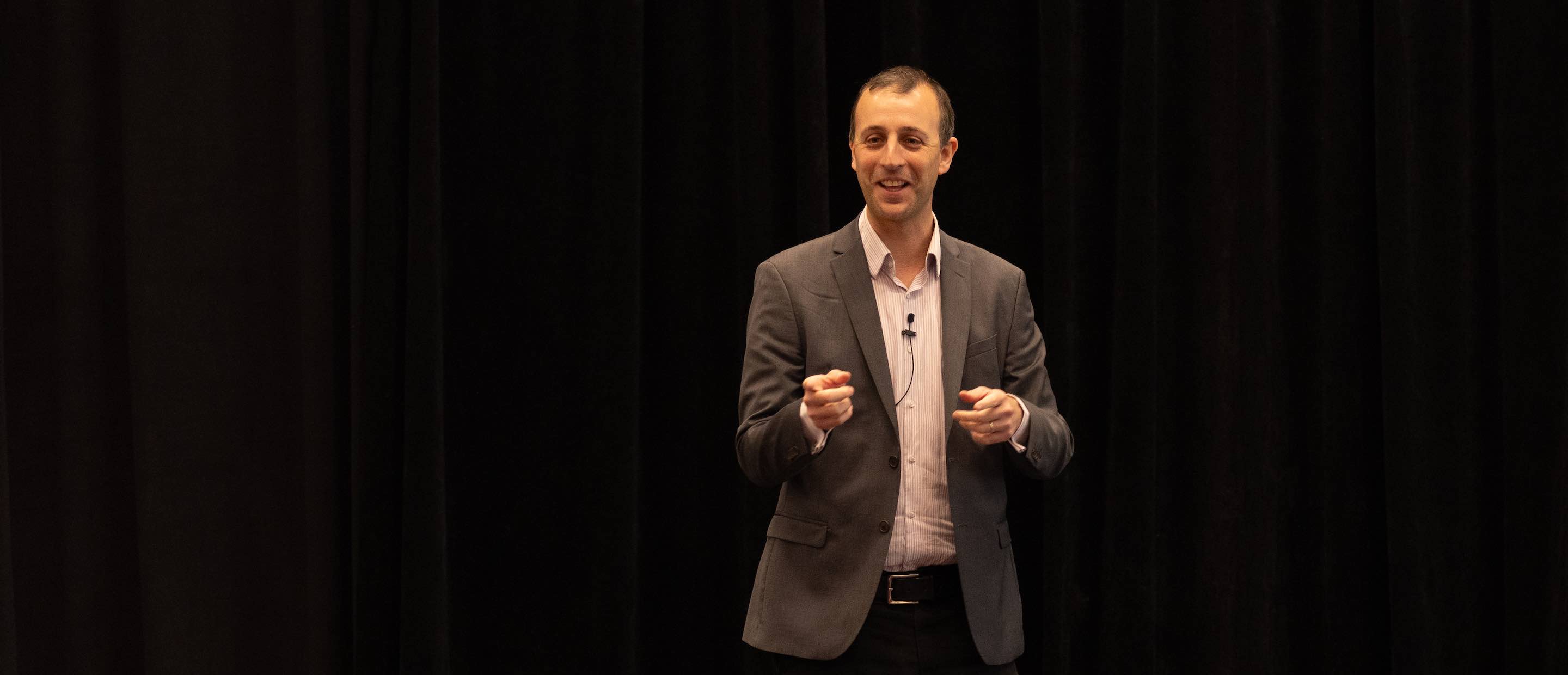
Adam de la Zerda, Founder, Visby Medical and Associate Professor of Structural Biology and Electrical Engineering, Stanford University
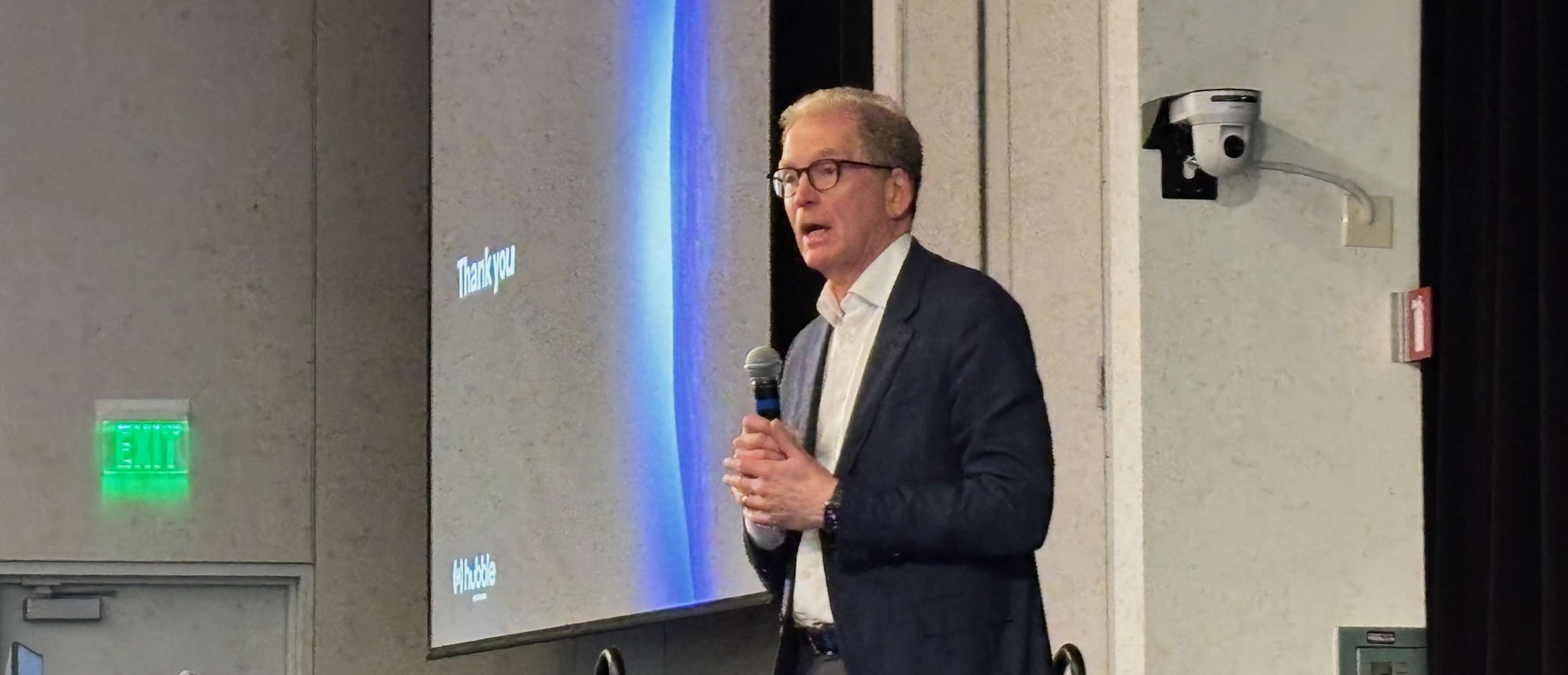
Dean Lloyd Minor, Dean of the Stanford School of Medicine, and Vice President of Medical Affairs, Stanford University.
Stanford’s latest breakthroughs in medical science and technology
The event began with a welcome reception featuring Stanford professor Carolyn Bertozzi, winner of the Nobel Prize in Chemistry in 2022. In a wide-ranging conversation with Salman Mahdi, Professor Bertozzi explained how her work in "bio-orthogonal chemistry" is enabling rapid advances in cancer treatment, drug delivery and diagnostic techniques, and shared insights on everything from anti-microbial resistance to the importance of interdisciplinary thinking.
The focus on medical science and technology continued the following day at the Stanford University School of Medicine, where attendees learned from numerous faculty members about the latest developments in fields ranging from bioengineering and neurology to biomedical data science. They also got the opportunity to meet with health-tech entrepreneurs supported by Catalyst, Stanford Medicine’s flagship innovation programme.
One highlight was a presentation by Adam de la Zerda, Associate Professor of Structural Biology and Electrical Engineering, in which he announced the launch of a new class of diagnostic product designed by his company Visby. The palm-sized device, which is low-cost and easy to use, replaces the need to for samples to be sent to a lab for professional analysis, and is now available to consumers without prescription across the US.
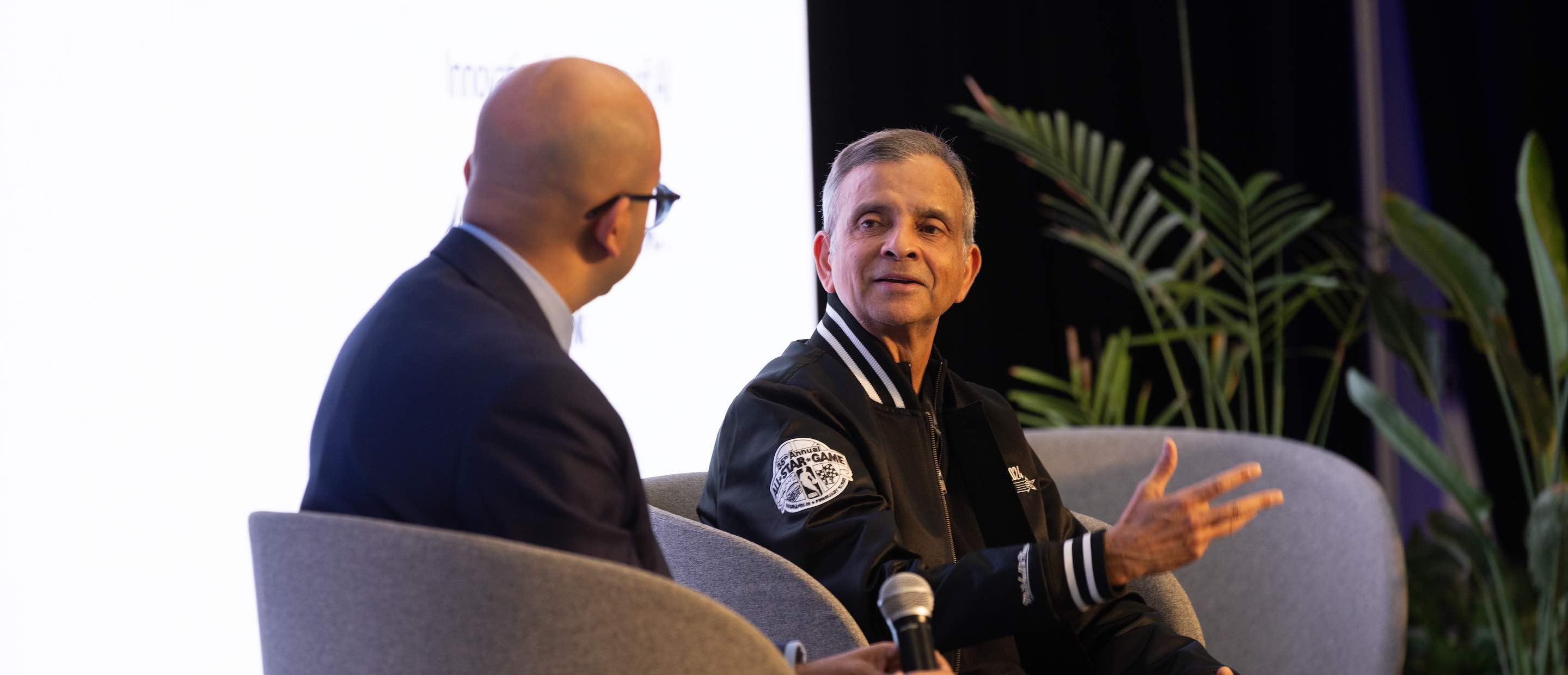
Arjun Nagarkatti, Head of US & Europe International, Deutsche Bank Private Bank; Vivek Ranadivé, Owner & Chairman of the Sacramento Kings; Founder & former CEO of TIBCO Software.
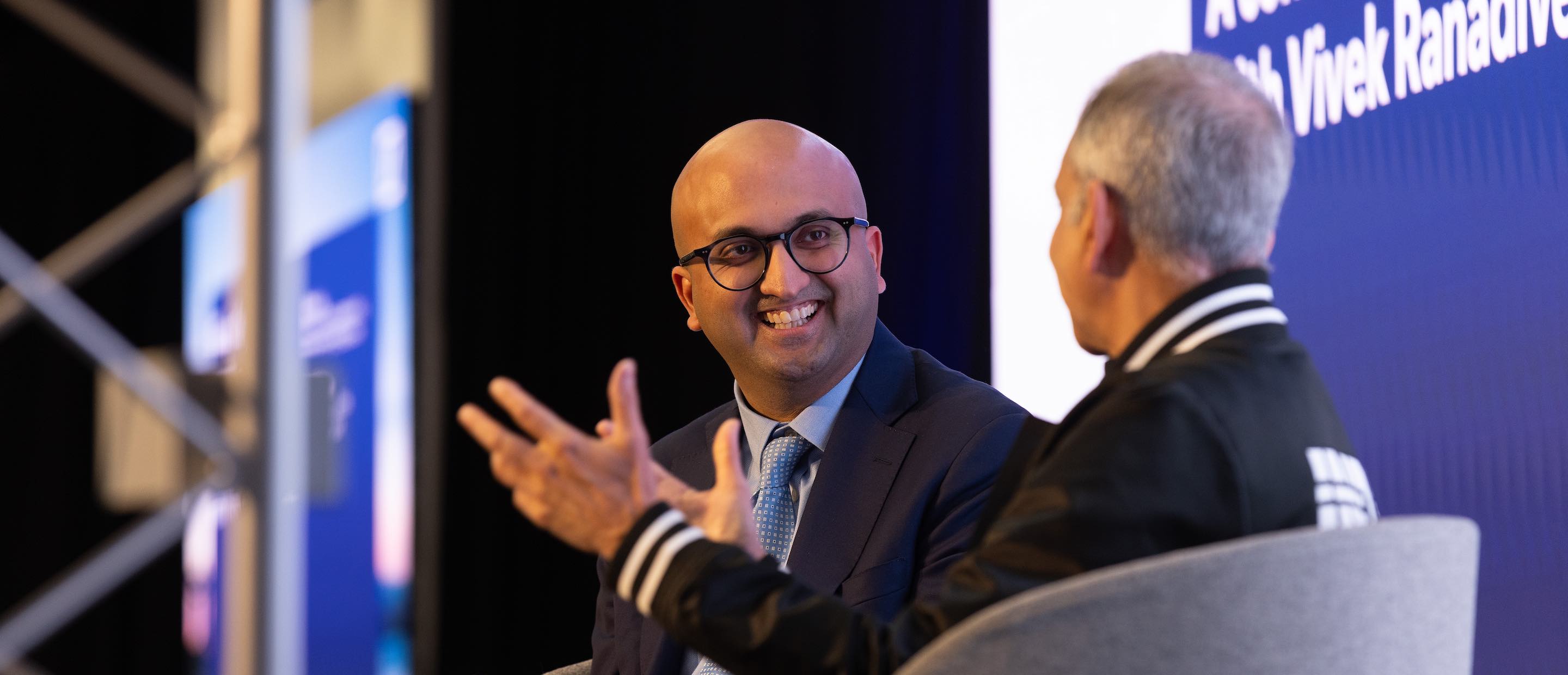
Arjun Nagarkatti, Head of US & Europe International, Deutsche Bank Private Bank; Vivek Ranadivé, Owner & Chairman of the Sacramento Kings; Founder & former CEO of TIBCO Software.
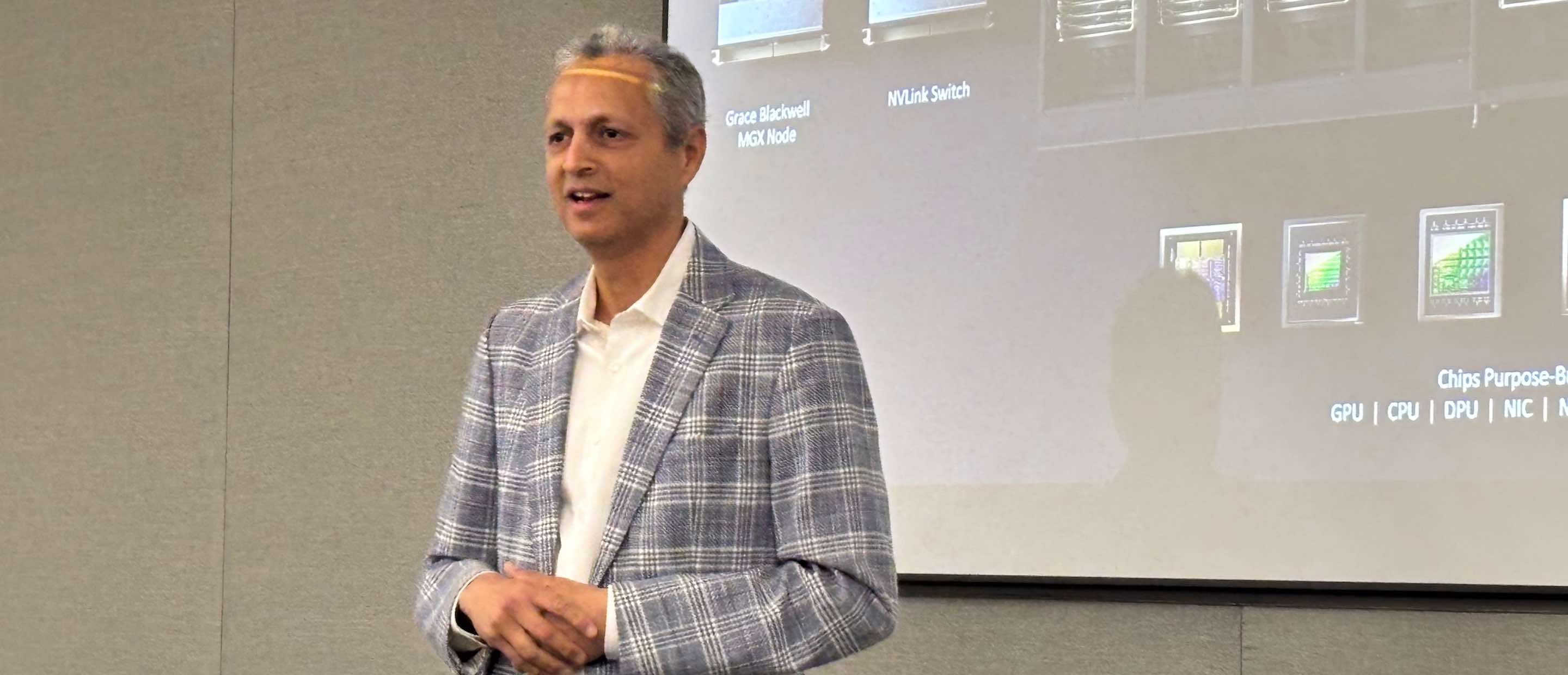
Ajay Shah, Co-Head of Technology, Media and Telecommunications Group, Deutsche Bank Securities Inc.
Lessons in AI readiness from Silicon Valley giants
As the event broadened into other fields, attendees heard from a number of high-profile speakers who were not only AI experts but also fellow investors and philanthropists – able to offer valuable advice about legacy as well as capital deployment. But also more abstract concepts such as AI ethics, purpose-driven entrepreneurship and how leisure and art are being transformed by AI technologies.
They emphasised how the Knowledge Economy in becoming an “Intuition Economy,” in which AI handles most of the repetitive, information-based tasks that were traditionally done by human knowledge workers. In this economy, the primary value humans bring is intuition: connecting new ideas, fostering creativity and generating insights that AI cannot simply produce from past knowledge.
Cyber-resilience was another theme discussed in various panels, with presenters and attendees sharing frameworks and best practices for managing digital threats. And there was lots of debate around AI’s consumption of water and energy – with concerns over resource scarcity weighed against the potential for AI to enhance efficiency, affordability, and sustainability. The contribution of immigrants to Silicon Valley’s ecosystem – especially from India and China – was also explored.
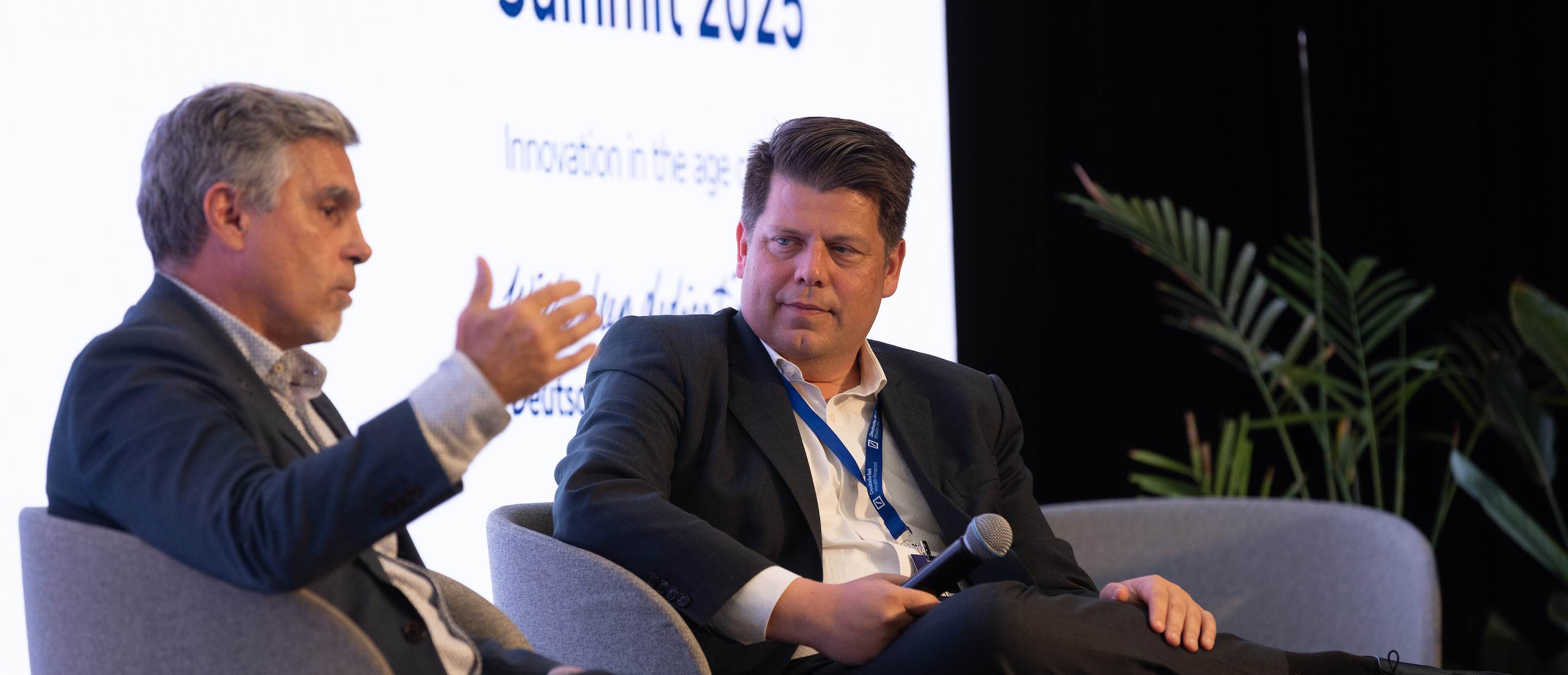
Chuck Templeton, Managing Partner and co-Lead of S2G Investments; Thomas Klemm, Head of West Coast South, Deutsche Bank Wealth Management
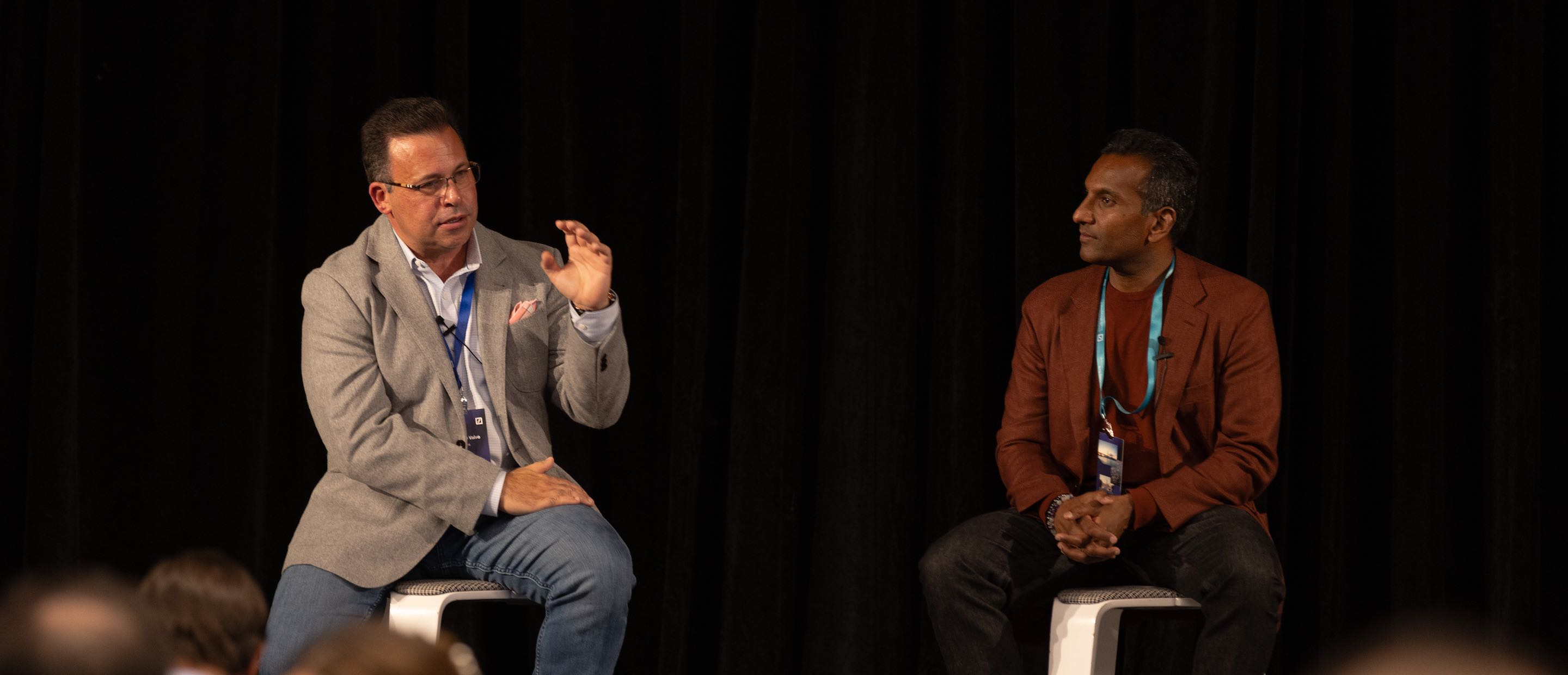
Anthony Valvo, Head of Private Bank US, Deutsche Bank Wealth Management – US; Divesh Makan, Founding Partner at ICONIQ Capital
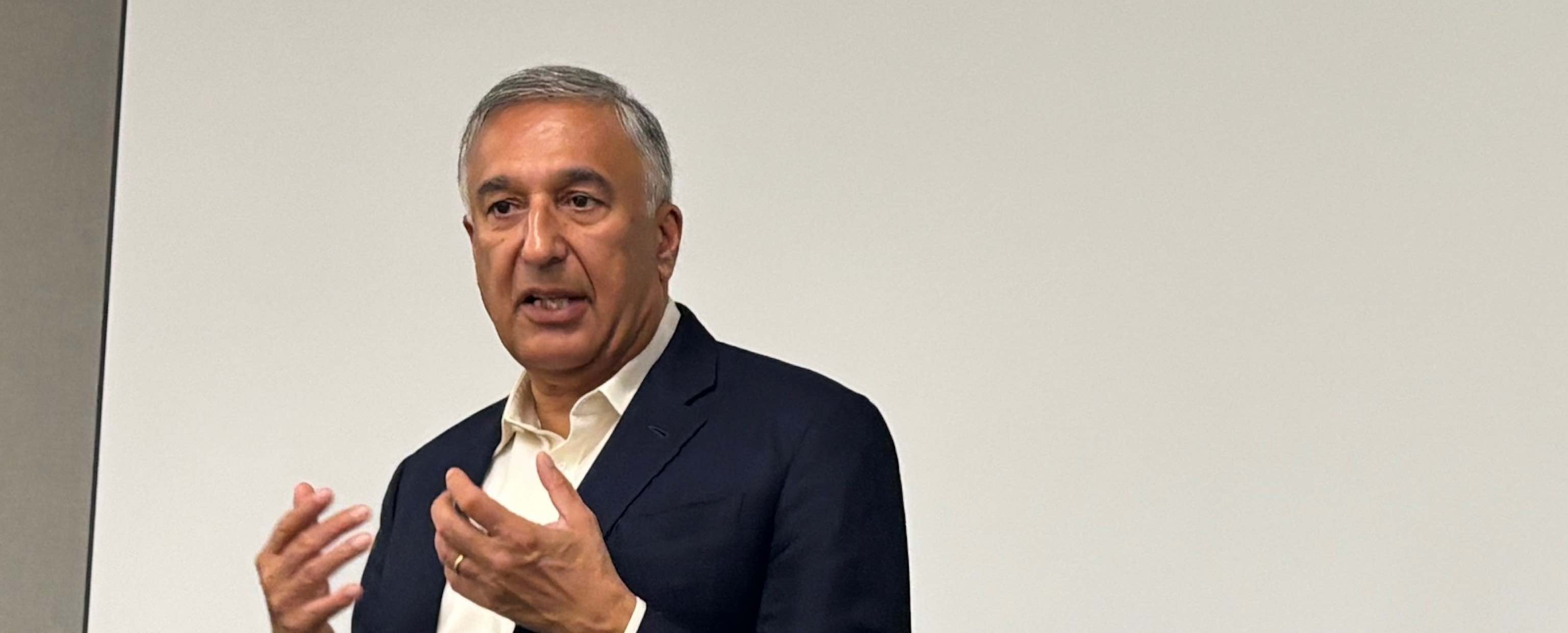
Shankar Trivedi, SVP of Enterprise Business, NVIDIA Worldwide Field Operations.
In a day of programming at Plug and Play, the world’s foremost start-up incubator, we were joined by an array of guest speakers including Vivek Ranadivé, the founder and former CEO of TIBCO Software, who is now owner and chairman of the Sacramento Kings basketball team; and Michael Baum, founder and CEO of Splunk, who now runs his own winery in France, Château de Pommard.
One of the most memorable panels from the day was a discussion of agentic AI, in which technologists discussed how each of us will soon be able to create “digital twins” – able to attend meetings on our behalf and carry out other highly complex tasks without supervision – with an ex-member of the United States House of Representatives in California, who was on hand to explain the difficulties of ensuring such technologies are properly regulated.
On the final day of the event, attendees visited Nvidia, where senior executives argued that AI technology is not simply in the latest investment craze but a fundamental restructuring of the global economy.
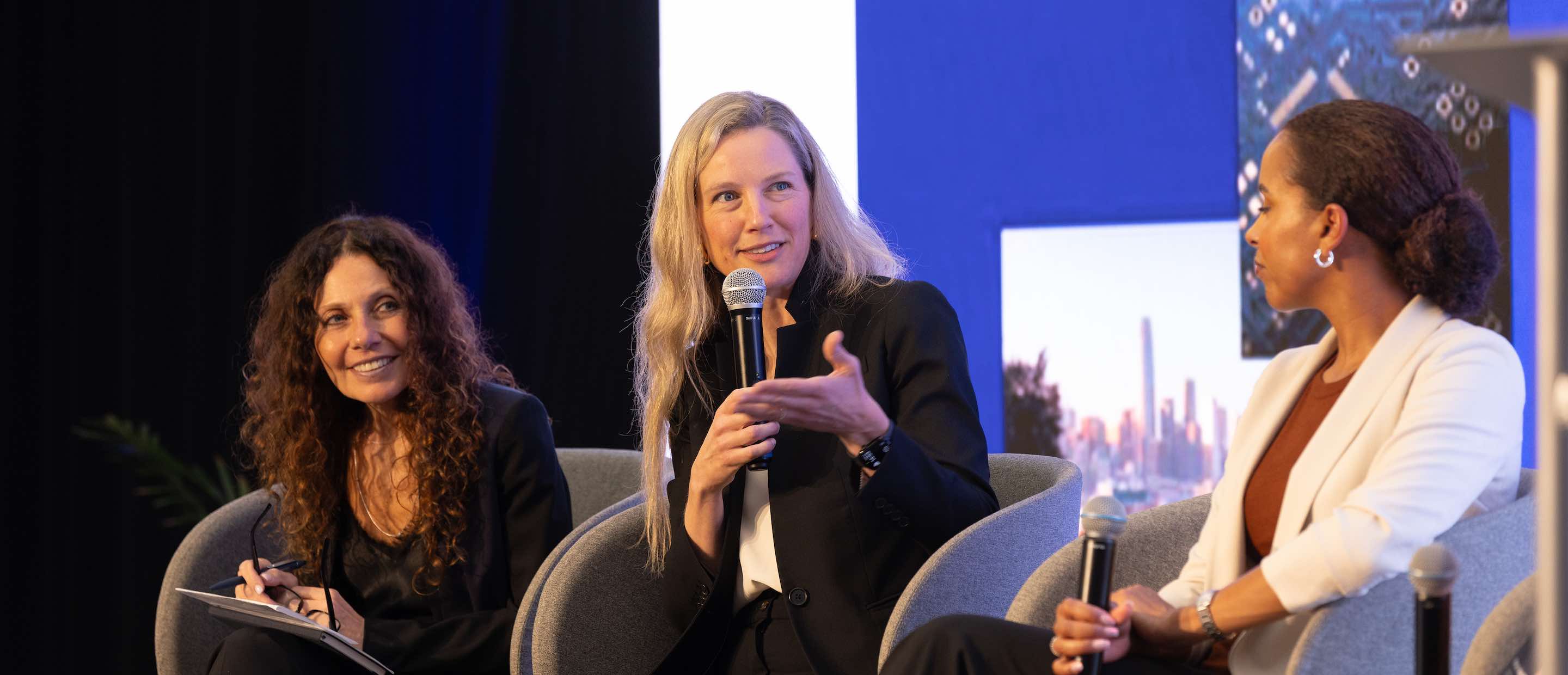
Jacqueline Valouch, Head of Wealth Planning and Philanthropy, Deutsche Bank; Sierra Peterson, Founding Partner, Voyager; Rachel Gillum, Vice President of Ethical & Humane Use of Technology, Salesforce
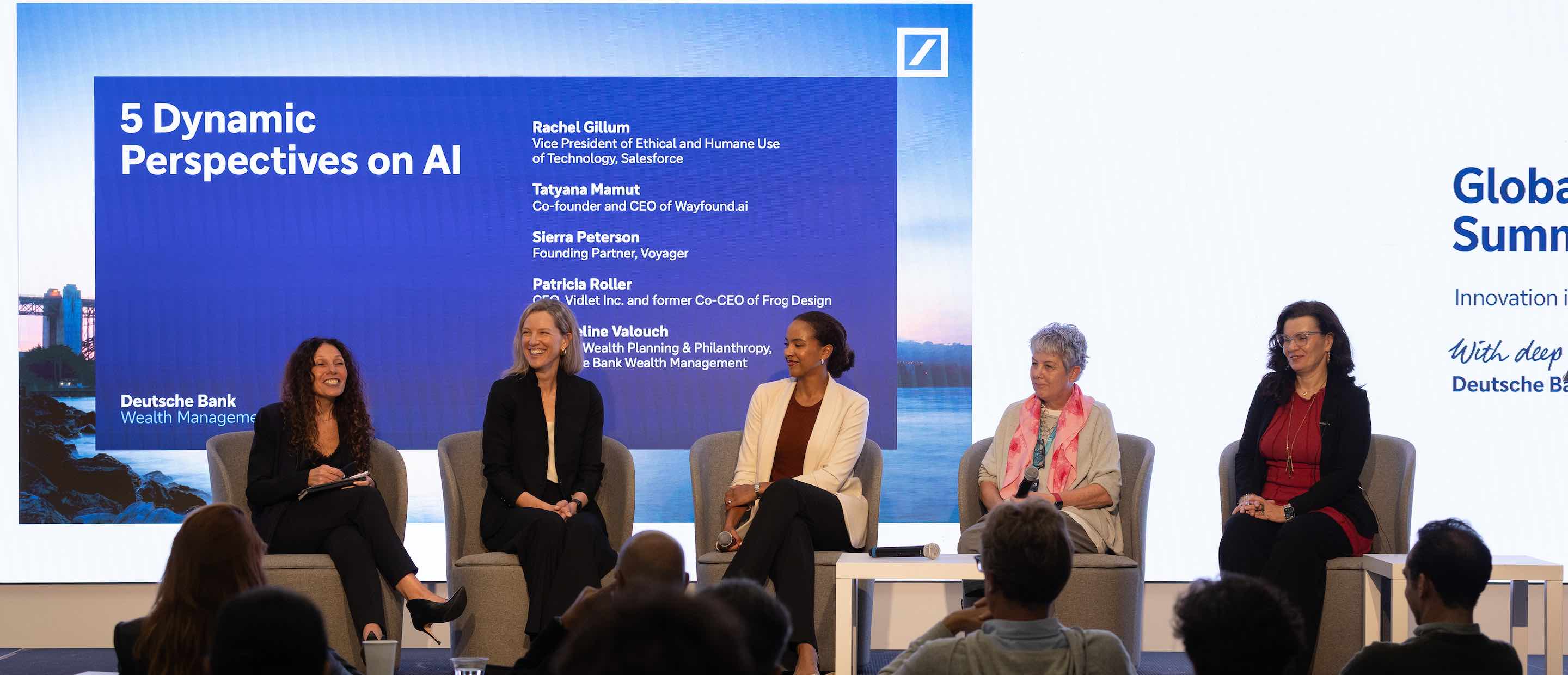
Jacqueline Valouch, Deutsche Bank; Sierra Peterson, Voyager; Rachel Gillum, Salesforce; Patricia Roller, Vidlet Inc.; Tatyana Mamut, Wayfound.ai

Jonathan Rowntree, CEO, Niron Magnetics
Special thanks
We would like to extend our special thanks to our speakers, and to all the staff at Stanford Medical School and Plug and Play, for their warm welcome and inspiring ideas:
Stanford University speakers
Dean Lloyd Minor, Dean of the Stanford School of Medicine, and Vice President of Medical Affairs
Carolyn Bertozzi, Professor in the School of Humanities and Sciences and Professor, by courtesy, of Chemical and Systems Biology and of Radiology
David Camarillo, Associate Professor of Bioengineering, by courtesy, Mechanical Engineering and Neurosurgery
Adam de la Zerda, Founder, Visby Medical and Associate Professor of Structural Biology and Electrical Engineering
Daphne Koller, Founder and CEO, insitro, co-founder, Coursera, Adjunct Professor, Computer Science
Dr Michelle Monje, Professor of Neurology and Neurological Sciences
Manu Prakash, Associate Professor of Bioengineering, Senior Fellow at the Woods Institute for the Environment and Associate Professor, by courtesy, of Oceans and of Biology
Kevin Wasserstein, Executive Director for Stanford Medicine Catalyst
James Zou, Associate Professor of Biomedical Data Science and, by courtesy, of Computer Science and Electrical Engineering
Other speakers
- Saeed Amidi, Founder and CEO, Plug and Play
- Michael Baum, CEO and Propriétaire of Château de Pommard and Founder & CEO of Splunk
- Scott Becker, CEO and Co-Owner, Realm Cellars
- Joshua Browder, CEO and Founder of DoNotPay
- Olivia Decker, Owner & Publisher, Haute Living San Francisco
- David Dreier, American businessman, philanthropist, and Republican member of the United States House of Representatives in California from 1981 to 2013
- Rachel Gillem, Vice President of Ethical & Humane Use of Technology, Salesforce
- Deepak Garg, Founder and CEO of Smart Energy Water
- Ali Golshan, Co-founder and CTO of StackRox
- Alex Haro, Co-founder and CEO, Hubble Network, co-founder Life360
- Tim Hwang, Founder and CEO of FiscalNote
- Andre Koo Sr., Honorary chairman of Chailease Holding
- Jasper Lau, Founder and CEO of Era
- Divesh Makan, Founding Partner at ICONIQ
- Tatyana Mamut, Co-Founder & CEO of Wayfound.ai
- Piyush Mangalick, Head, AI Applied Engineering, Microsoft
- Saket Modi, Co-Founder and CEO, SAFE
- Tash Perrin, Deputy Chairman at Christie’s International
- Sierra Peterson, Founding Partner, Voyager
- Vivek Ranadivé, Owner and Chairman of the Sacramento Kings; Founder & former CEO of TIBCO Software
- MR Rangaswami, Indian-American investor, entrepreneur, corporate eco-strategy expert and philanthropist
- Mark Rivers, CEO, Canyon Ranch
- Patricia Roller, CEO, Vidlet Inc. and former Co-CEO of Frog Design
- Jonathan Rowntree, CEO, Niron Magnetics
- Neil Serebryany, Founder & CEO of CalypsoAI and Venture Partner of Flex Capital
- Ajay Shah, Co-Head of Technology, Media and Telecommunications Group, Deutsche Bank Securities Inc.
- Bipul Sinha, CEO, Chairman and Co-founder of Rubrik, Inc
- Chuck Templeton, Managing Partner and co-Lead of S2G Investments
- Devang Thakkar, Global Head of Christie’s Ventures
- Shankar Trivedi, Senior Vice President of Enterprise Business, NVIDIA Worldwide Field Operations
- Decius Valmorbida, President, Travel, Amadeus
- Rex Wong, CEO, Hollo AI