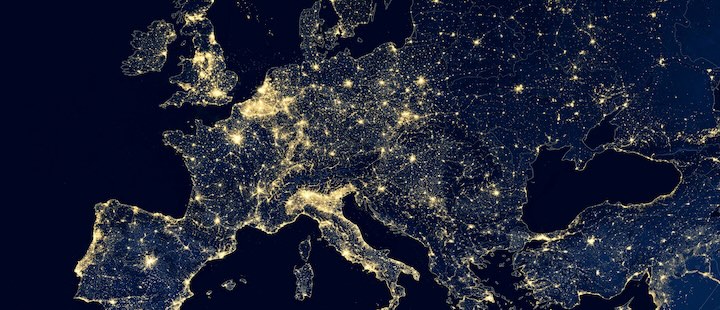
Europe has weathered the 2026 Strait of Hormuz crisis better than the energy shock of 2022. But does a more muted market and economic reaction mean the region has become truly resilient?


This PERSPECTIVES Special explores how Europe's energy security, supply chains and policy response have evolved in recent years, separating cyclical factors from deeper structural changes. It also examines the implications for inflation, growth and European equities, and what Europe's growing focus on resilience means for investors.


Key takeaways

  • European resilience should not be measured solely by the ability to absorb short-term shocks. Improvements to long-term competitiveness, productivity and private-sector investment are key. Without them, the approach to European resilience may remain defensive and state-dependent rather than focusing on becoming a durable growth driver.
  • Limited economic fallout from the 2026 Hormuz crisis – compared to the 2022 energy shock – reflects a more favourable macroeconomic background as well as increased supply-side resilience. With euro-area inflation already close to the 2% target before the crisis, only modest monetary policy tightening is expected.
  • European equities have weathered the recent energy shock relatively well, with earnings forecast upgrades  largely concentrated in the energy sector. Europe’s resilience agenda could create new opportunities across utilities, defence, industrials and technology.

The PERSPECTIVES Special is currently available and client-ready for the following regions: Germany, Americas, Europe, Middle East, Africa and Asia Pacific.

PDF

Language:
podcast hero

PERSPECTIVES Weekly Podcast

August 3 – Volatility amid strong fundamentals

Stock markets have had some stumbles recently, with selloffs in the technology sector followed by rapid recoveries, but the fundamentals of the AI rally have not changed, says Dr. Jacky Tang, the Private Bank’s CIO for emerging markets, in this week's episode.

Aug. 03, 2026


See more

In Europe, Middle East and Africa as well as in Asia Pacific this material is considered marketing material, but this is not the case in the U.S.

The value of an investment can fall as well as rise and you might not get back the amount originally invested at any point in time. Your capital may be at risk.

No assurance can be given that any forecast or target can be achieved. Forecasts are based on assumptions, estimates, opinions and hypothetical models which may prove to be incorrect. Past performance is not indicative of future returns. Performance refers to a nominal value based on price gains/losses and does not take into account inflation. Inflation will have a negative impact on the purchasing power of this nominal monetary value. Depending on the current level of inflation, this may lead to a real loss in value, even if the nominal performance of the investment is positive.

This web page is not an offer to buy a security or enter into any transaction. The products, services, information and/or materials contained within these web pages may not be available for residents of certain jurisdictions. Please consider the sales restrictions relating to the products or services in question for further information. Deutsche Bank does not give tax or legal advice; prospective investors should seek advice from their own tax advisers and/or lawyers before entering into any investment.