If human beings are going to create a sustainable economic system, we must recognise the true value of living ecosystems and the services that they provide to society, and price this into our financial decisions. In the long term, the benefits will far outweigh the costs, Markus Müller tells LUX magazine.
Our enthusiasm for economic development has detached us from nature. With our focus on the production of goods, we have forgotten that there literally is a natural limit to our endeavours. If we value nature purely in terms of the raw materials it provides, we fail to appreciate the many ‘ecosystem services’ that living creatures and plants provide to society, and research suggests the markets would price these at about $140 trillion.
The world is fast-approaching a point where its natural capital is so depleted that it can no longer provide us with these services. As a species, we are acting rather like a company owner who operates their machinery 24/7 without maintenance, then acts surprised that their production line is no longer able to deliver the goods. The difference with nature is that there is no option of buying a new machine.
Humans, economy and society are embedded in the environment. This applies to food, but also to areas such as medicine. We know, for example, that many of the organisms living in the sea have contributed to the development of cancer treatments and other crucial drugs. It is reasonable to suppose that similar discoveries are waiting to be made in the world’s most biodiverse habitats such as rainforests and coral reefs, and if we kill our planet’s biodiversity then we will undoubtedly kill many such opportunities.
Why sustainability requires thinking beyond 'risk versus return'
What does this mean for us in our daily lives, for companies, and also for the economic and financial markets? If we look at the numbers alone the issue of sustainability may appear to already be centre stage. Around the world we see growing regulation, not only in creating transparency but also guiding money flow. Now accounting for more than 36 per cent of funds under management globally, environmental, social and governance (ESG) investments have established themselves as mainstream.
However, while the ESG concept divides up current business activities into three specific categories, making the transition to truly sustainable business practices requires more than just an appreciation of financial risk and return. The ultimate objective must be to promote the health of planet Earth for the benefit of generations to come. As Gro Bruntland, the former Norwegian prime minister, said in 1987: humanity has the ability to make development sustainable to ensure that it meets the needs of the present without compromising the ability of future generations to meet their own needs.
When discussing the economic opportunities around biodiversity, I always provide a caveat. What we are dealing with is a global common good. We can’t deal with it in the same way as a private good, which is a product we can manufacture. In terms of business opportunities, we need to be careful when we speak of a global common good – like biodiversity, clean air or even the ocean – as there is a risk of doing business as usual, and exploiting these fundamentals of our wellbeing.
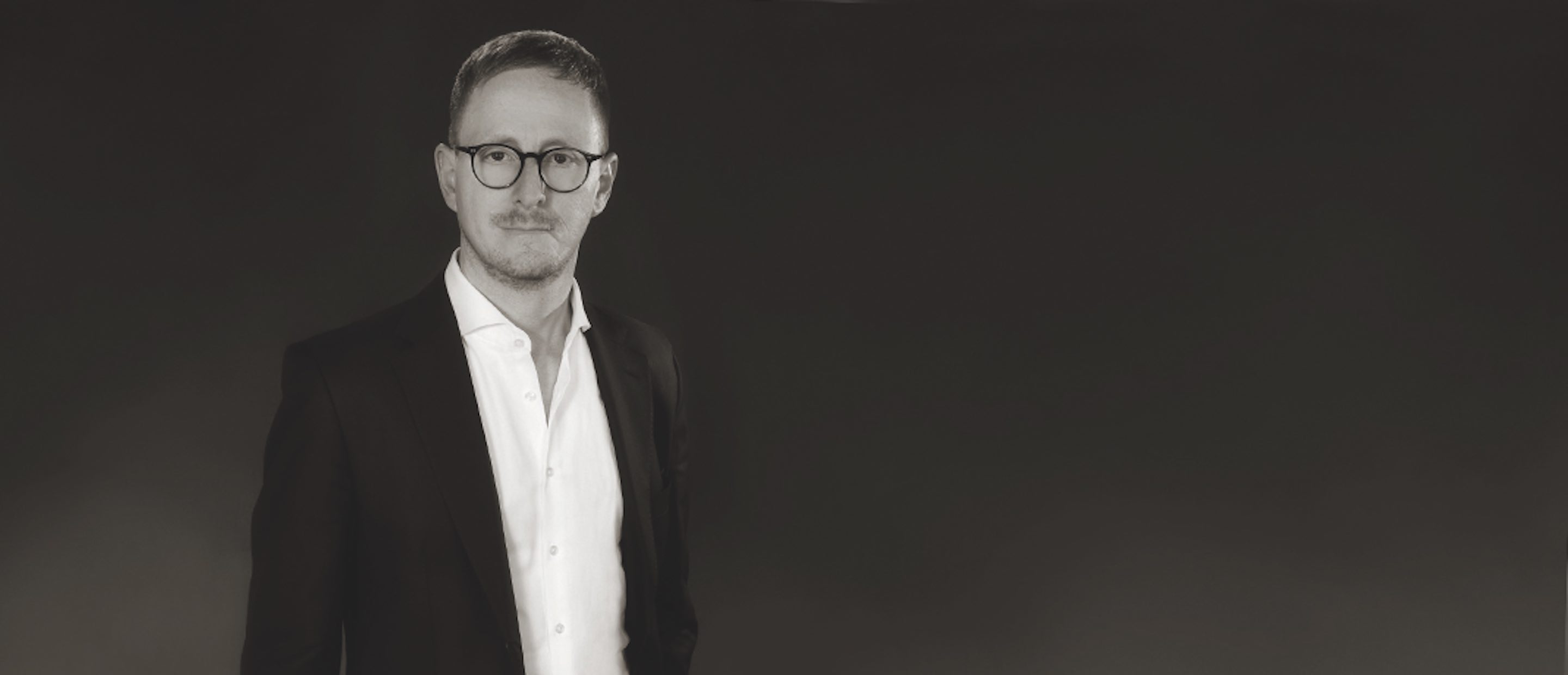
Markus Müller is Chief Investment Officer ESG & Global Head of Chief Investment Office at Deutsche Bank Private Bank.
Working with nature to find sustainable solutions
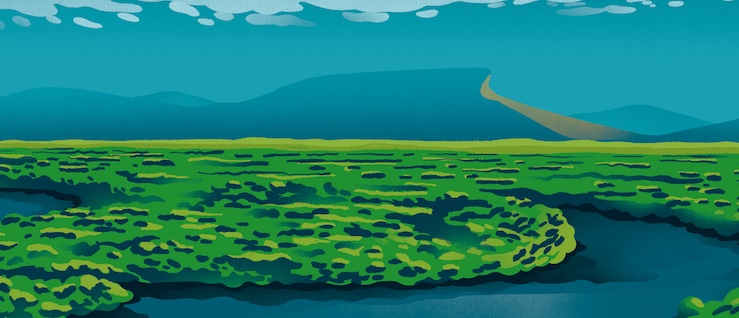
The good news is that with the right governance, we can move quickly from over-exploitation to repair and rejuvenation. Take mangroves, for example: they are difficult to plant, but can be reinvigorated easily. And when they are healthy they act as an effective natural carbon sink, as well as lifting the ground level by collecting and storing soil. They represent a cost-effective ‘nature-based solution’ to both climate change and rising sea levels – and, therefore, a potential business opportunity.
Simultaneously, broader economics must be considered. ESG-based investments are increasingly being incorporated into governmental social and economic policies, and should boost economic growth by encouraging more responsible management of the world’s natural resources. The concept of natural capital – valuing living things like other assets, in order to conserve them – is gaining ground with economists, and when industrial leaders begin to realise its significance then it will completely change the way they do business.
An investment approach fit for the 21st century
As the awareness of biodiversity loss grows, it should become an increasingly important part of corporate strategy and political policy, drawing more attention to shortcomings in existing evaluation approaches while also prompting solutions. Biodiversity loss gives rise to risks (physical, transition, and liability) for companies in myriad ways. Any decision, be it in investment or finance, therefore needs to encompass the entire product life-cycle and examine the whole supply chain.
The framework we use to evaluate biodiversity preservation is likely to evolve, which will have direct implications not only for investors but also for policymakers and economists. Also, the question of property rights will need to be considered in the context of local political and cultural priorities – a tension that may be difficult to resolve. Solving the geopolitical dimension is likely to be even more difficult, as this will require the financially strong First World to demonstrate the will to obtain goods from sustainable production. All this will come at a cost, but it’s most definitely a cost worth paying to ‘protect our portfolio’. The concept of natural capital could herald the beginning of a big story – one of an innovative and equitable economic model – that is worthy of the 21st century. To reiterate my opening message: if all things were similar then there would be no development. The outcome, instead, would be destruction. Let’s embrace this challenge and adapt to a new future, embedded in nature.
Markus Müller is Chief Investment Officer ESG & Global Head of Chief Investment Office at Deutsche Bank Private Bank.
This article first appeared in the Spring/Summer 2022 issue of LUX magazine. This issue features the fourth in a series of Deutsche Bank Wealth Management/LUX supplements about our ocean and its importance to both the environmental and economic wellbeing of the planet.