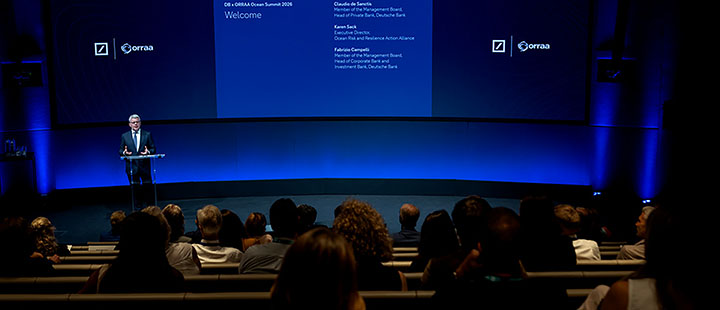
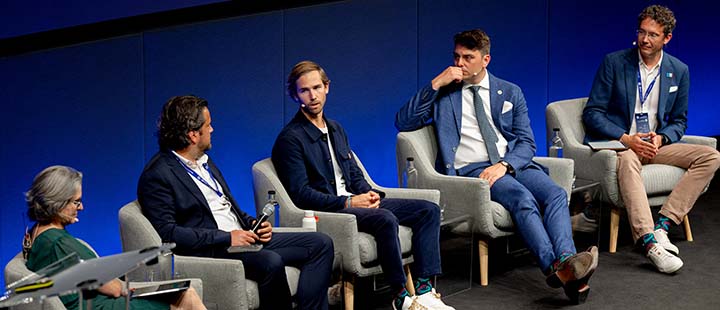
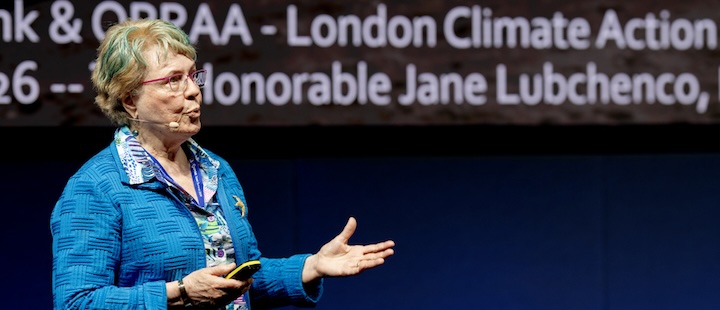
At the Economist’s 11thannual World Ocean Summit, we hosted a "How To" session aimed at creating a set of action points and practical takeaways for individuals and organisations committed to restoring ocean health.

The interactive session had a small, focused group of subject-matter experts exploring how investors can invest better in the blue economy.

The speakers discussed how companies must start looking at their value chains and identify those with a sustainable business model and strong growth potential. They explained the key performance indicators that can inform decisions that align with sustainable goals. The discussion also provided guidance on how businesses can effectively communicate their sustainability commitments to attract investment and foster stakeholder trust.
 

Key Takeaways

  1. When considering the idea of how to invest better in the blue economy, four key areas were discussed: regulation, metrics, litigation, and finance and investment.
  2. To maximise impact, science, finance and policy need to work together and to speak a common language.
  3. Closing the finance gap is being approached in the wrong way. A “finance gap” implies that more money is needed to close a gap. However what is actually needed is for the money to flow into the right projects. In order to achieve this, nature and ocean compliant projects need to be economically viable with a stable and attractive risk profile.
  4. During this time of sustainable transition, there is regulatory ambiguity, which needs a flexible and adaptive regulatory framework.
  5. The major sector incumbents in business need to be the ones to drive the necessary system changes that will create a sustainable blue economy.
  6. We need new sustainable business models that recognise society’s dependence on nature. Value chains need to drive this change and disruption by innovation-driven startups can make a substantial difference in reconfiguring value chains.
  7. Investors play an important role in identifying ocean-positive business models with strong growth potential. Economic viability remains important throughout the transition. This does not mean that the focus is only on direct ocean-related businesses; businesses need to rediscover and understand their value chain.
  8. Fit-for-purpose metrics are critical in supporting stakeholders to make ocean-positive decisions, including investment decisions. It is the purpose of the metrics that will support ocean regeneration that matters, and not the volume.
  9. Nature-related risk needs to be recognised as a material financial risk, incentivising action by business and investors.
  10. The role of litigation is crucial and often overlooked: it has to be part of a sensible risk-management approach; litigation is rapidly escalating both from the authorities and third parties.
  11. Nature-based solutions could generate multiple revenue streams to boost economic viability (e.g. aquaculture and ecotourism). Governments and supranationals can help mobilise the necessary capital to grow nature-based solutions. A co-benefit approach needs to be embedded in the project design such as the System of Environmental Economic Accounting (SEEA), which complements GDP.

Moderator:

Martin Koehring, Global director of impact, Forum for the Future

Panel:

Markus Müller, Chief investment officer ESG, Deutsche Bank

Karen Sack, Executive director, Ocean Risk and Resilience Action Alliance (ORRAA)

Maria de Athayde Tavares, Lawyer – finance, energy and infrastructure, Lisbon, Linklaters

Annick Paradis, Executive director, Pollination

Clara Johnston, Account executive, NatureMetrics


Access the report from this and other sessions hosted at 11th World Ocean Summit at Impact.Economist.com

Related articles

entrepreneurship hero

Ocean entrepreneurship

Entrepreneurship in the sustainable blue economy

The ocean needs our help. New business startups are revolutionizing the blue economy while conserving the ocean. With ground-breaking innovations and technologies, ocean start-ups are creating new opportunities for investment.

Dec 30, 2026


ocean champions sailgp

Ocean partnership

Ocean champions raising awareness of the ocean

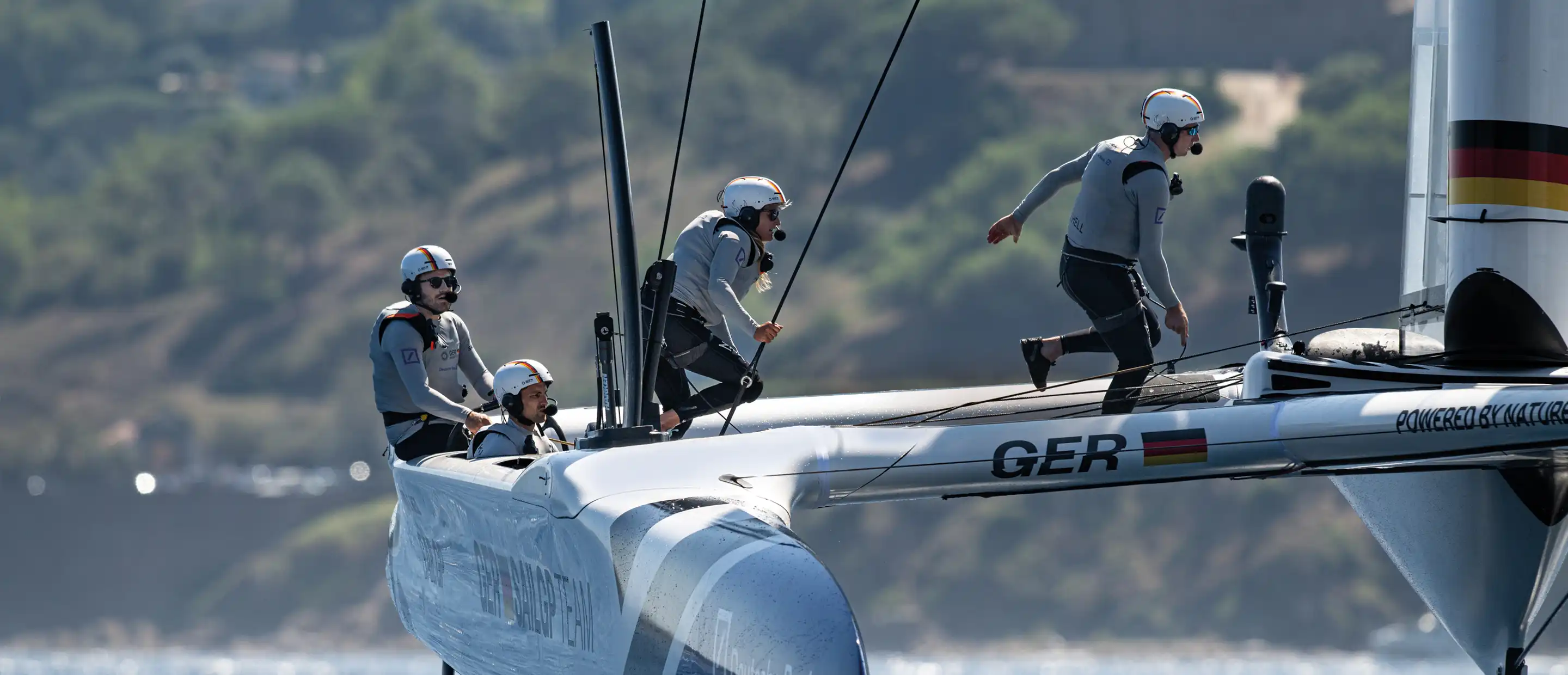
From athletes to philanthropists to ocean advocates, we share an ambition to raise awareness on how to protect the ocean.

Dec 30, 2026


In Expert Views section, explore our range of feature articles, podcasts and event highlights on nature-based solutions, the circular economy, and achieving a positive ocean impact and more.

Dec 30, 2026


blue economy hub

Sustainable blue economy insights

A healthy ocean is central to our planet's future. At Deutsche Bank, we are committed to playing our part in building a sustainable blue economy.

Dec 30, 2026


new york city harbor edna

Measuring ocean biodiversity

New York harbour secrets: eels and eDNA

Following eDNA testing at multiple locations around the world with our partners the SailGP Germany team and NatureMetrics, we returned to New York one year on to discover what our 2025 eDNA survey reveals about the city's underwater inhabitants.

Oct 28, 2025


Dr V Pirotta dolphins

Measuring ocean biodiversity

Aussie eDNA: our sampling programme reaches Sydney Harbour

Sydney Harbour was one of the destinations for Deutsche Bank’s global eDNA sampling programme. We spoke to scientist Dr. Vanessa Pirotta about how this collaborative initiative can contribute to our knowledge of local marine life.

Jul 28, 2025


Permit 14122

Measuring ocean biodiversity

Understanding our oceans: Deutsche Bank eDNA testing programme reaches Alaska

Deutsche Bank’s eDNA testing programme continues, giving new insights on marine life around the world.

May 24, 2025


mob what is blue economy

ESG jargon-buster

What is the blue economy?

The blue economy can be defined most broadly as all economic activity, whether it is sustainable or not, with a direct or indirect link to ‘ocean’.

Apr 24, 2025


putting nature on the balance sheet banner

Future Fundamentals Podcast

Putting nature on the balance sheet

In our Future Fundamentals podcast, Naoko Ishii, Executive Vice President of the University of Tokyo and Director of the Center for Global Commons, and Markus Müller, our Chief Investment Officer for Sustainability, discuss putting nature on the balance sheet and how to build a coordinated financial response to this global challenge.

Feb 11, 2025


Underwater image showing ocean life and biodiversity

PERSPECTIVES Special

New Blue Perspectives: Monitoring Ocean Biodiversity

In this report, we describe initial findings from our research project to monitor ocean biodiversity. Working with our partners, we used environmental DNA (eDNA) techniques to analyse ocean water samples.

Oct 10, 2024


edna banner desk

Measuring ocean biodiversity

eDNA: measuring ocean biodiversity

We’re always looking for ways to connect our partners and raise awareness of things we know our clients care about. Together with our partners, we track biodiversity in our ocean in this eDNA project initiative.

Oct 01, 2024


life pillar desk

ESG jargon-buster

What are Life Pillars?

Life Pillars provide essential resources and services crucial for the prosperity of humanity and the global economy — and yet they are often undervalued or taken for granted.

Aug 01, 2024


Sea Boat sealing in ocean view from above. Aerial view of moving boat or yacht in sea.

An ocean journey

We are on a journey to raise awareness about the importance of the ocean to the global economy and life on earth. Our focus on the ocean has shaped our research and deepened our understanding of the links between nature and the economy.

Jun 10, 2024


See more

In Europe, Middle East and Africa as well as in Asia Pacific this material is considered marketing material, but this is not the case in the U.S.

The value of an investment can fall as well as rise and you might not get back the amount originally invested at any point in time. Your capital may be at risk.

No assurance can be given that any forecast or target can be achieved. Forecasts are based on assumptions, estimates, opinions and hypothetical models which may prove to be incorrect. Past performance is not indicative of future returns. Performance refers to a nominal value based on price gains/losses and does not take into account inflation. Inflation will have a negative impact on the purchasing power of this nominal monetary value. Depending on the current level of inflation, this may lead to a real loss in value, even if the nominal performance of the investment is positive.

This web page is not an offer to buy a security or enter into any transaction. The products, services, information and/or materials contained within these web pages may not be available for residents of certain jurisdictions. Please consider the sales restrictions relating to the products or services in question for further information. Deutsche Bank does not give tax or legal advice; prospective investors should seek advice from their own tax advisers and/or lawyers before entering into any investment.