
Family office perspectives: building resilience across generations
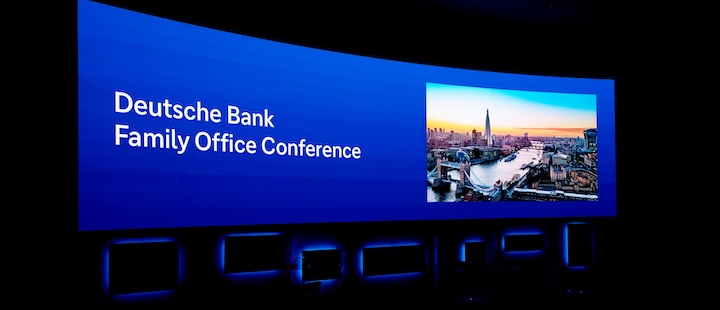
The interpersonal dimension of governance, balancing discipline with agility and managing geopolitical risk were key themes in this panel discussion at the Deutsche Bank Family Office Conference in London.
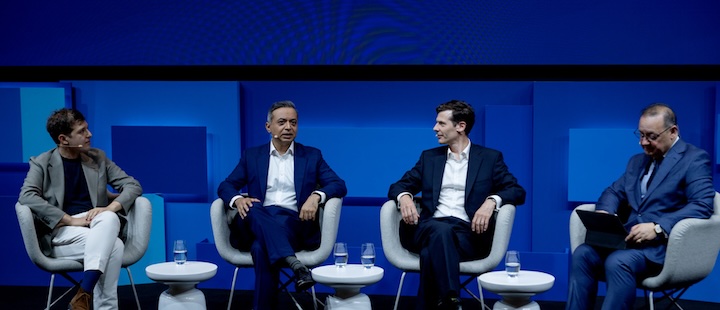
Leaders from three family offices reflected on how they take decisions designed to preserve and grow wealth over generations in a debate moderated by George Varoutsis, Head of Investment Management – US & Europe International, Deutsche Bank Private Bank.
A European-based family office chief executive described the complexity of operating a firm where three adult generations are part of the conversation, and with individual portfolios sitting alongside jointly held assets.
Understanding how each family member thinks about risk, liquidity and the purpose of wealth is essential before turning to asset allocation, they said. Governance, they emphasised, is first and foremost a human process with families bringing different perspectives and experiences to the table.
Trust is foundational. With advisers helping families to navigate sensitive decisions, cultural fit and mutual confidence matter as much as technical skill. “This is a very intimate setting,” said the speaker. “It’s not transactional. It’s about trust and being able to work together for many years.”
How to pace deployment after liquidity events
Panellists explored the psychological impact of a liquidity event and the shift from operating a business to managing capital. They considered how families emerging from a sale may experience decision fatigue, pressure to deploy capital quickly and a surge of proposals arriving at once.
“Pacing is something we need to manage,” said an international family office chief executive. “There is always the fear of missing out, and managing the pressure to deploy is a key challenge.”
They described the transition as particularly demanding: “Liquidity events can be emotionally, mentally and physically taxing, and some of the worst financial decisions families make come in the period immediately after one – when concern that idle cash is losing value creates pressure to deploy and judgment is most stretched.”
Starting with more "reversible" liquid exposures and only gradually moving into alternative assets is one way to manage that pressure, they noted.
The conversation highlighted the value of combining structure with flexibility, bringing institutional process and risk oversight into a family office while retaining agility to capture “the best of both worlds.”
“The core investment strategy and the rigour in underwriting, risk management and target returns has not changed,” said the executive, comparing their current role with previous experience at a sovereign wealth fund. “But we have a very lean structure, so we can make investment decisions based on convictions when needed.”
Managing risk and liquidity amid geopolitical uncertainty
The debate turned to navigating geopolitical risk. Panellists emphasised the importance of a clear investment thesis and preparing for a wide range of potential outcomes.
The global investing environment has “become more like emerging markets”, said the European family office executive. “Dealing with geopolitical risk, volatility and uncertainty is best done with a set of prior ideas about how you want to run your portfolio, not in the middle of the crisis situation,” they added. “If you don't have a plan, what the market offers you is the plan.”
Liquidity management was seen as vital. Public markets may offer tactical agility amid volatility while private markets can provide stability and uncorrelated returns, said one panellist, who favoured an “endowment‑style” balance.
Key takeaways:
- Governance of investment processes depends on understanding the different perspectives and levels of experience within the family, supported by a high degree of trust between advisers and family members.
- Pressure to deploy capital quickly after liquidity events can trigger “fear of missing out”, so thoughtful pacing becomes a critical part of post‑liquidity decisions.
- Liquidity played different roles across the panel: a buffer after a sale; a way to take advantage of volatility in public markets; and a constraint demanding discipline when equity is tied up for years.
- Family offices can capture “the best of both worlds” by combining institutional‑level underwriting and risk oversight with a lean structure offering the agility to act when conviction is high.
- As geopolitical uncertainty becomes more widespread, having clear portfolio principles helps prevent the market from dictating decisions.
More insights from the conference
Event highlights
Deutsche Bank Family Office Conference, London 2026
Watch key sessions from our June 2026 Family Office Conference, exploring how family offices can move from uncertainty to strategy in a shifting global landscape.

Event report
London Family Office Conference 2026: from uncertainty to strategy
Explore key insights from Deutsche Bank’s London Family Office Conference 2026, where global experts and family offices discussed trends, strategies and opportunities.
Event report
London Family Office Conference 2026: advancing technology and positioning for structural shifts
The pace of AI adoption, valuations and the agility of family offices were central themes in this discussion on positioning for technology-driven change at the Deutsche Bank Family Office Conference.
Family office insights

Feature article
Family office governance: how to translate vision into structure
Aug. 20, 2026

Feature article
Family office stewardship in a changing world: considerations for wealth, purpose and legacy
Aug. 14, 2026

Feature article
Family office succession planning: preparing the next generation of leaders
Jul. 01, 2026
.webp)
Feature article
Family office legacy planning: shaping purpose beyond capital
Jun. 19, 2026

Event report
London Family Office Conference 2026: advancing technology and positioning for structural shifts
Jun. 16, 2026



Feature article
Stewardship in a fragmented world: geopolitical implications for family offices
May. 27, 2026


Show more
Show less