Please find enclosed the latest edition of our PERSPECTIVES Viewpoint – designed to provide regular, up-to-date analysis of key trends in all the major asset classes.


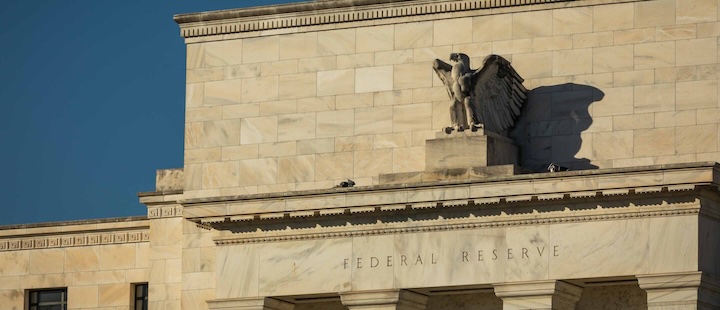
In this Viewpoint Fixed Income, we look at how the global rates reset is reshaping bond markets across major regions. As energy-driven inflation risks, fiscal pressures and shifting central-bank expectations move yield curves, we examine where duration opportunities may emerge and why the short end could offer the clearest path as policy visibility improves while the long end continues to face more drag.


Key takeaways:

  • Global bond yields have repriced sharply higher as energy-driven inflation risks push markets to price tighter monetary policy.
  • Central banks may still avoid full tightening cycles, with energy pressures expected to ease and growth risks limiting the scope for aggressive hikes.
  • Front-end yields should benefit most once easing expectations return, particularly in the US and the euro area, while long-end yields remain constrained by fiscal and term-premium risks.
  • Supply management can only partially relieve pressure on the long end but not fully offset it.

 

The PERSPECTIVES Viewpoint is currently available and client-ready for the following regions: Germany, Americas, Europe, Middle East, Africa and Asia Pacific.

PDF

Language:

'


Deutsche Bank is an equal opportunity lender and does not discriminate based on race, color, national origin, religion, sex, familial status or handicap (disability).

The products and services described on this page are not appropriate for everyone, so you should make a decision based on your financial, legal and tax situation after consultation with your tax and legal advisors. Deutsche Bank does not provide accounting, tax or legal advice to its clients. This information is not financial advice or a solicitation. 

This is not a commitment by Deutsche Bank AG or any of its subsidiaries or affiliates (collectively referred to as “Deutsche Bank” or “Bank”) to make any loan. Loan transactions are subject to (i) the Bank’s due diligence procedures, including but not limited to “know your customer” policies, (ii) satisfaction with the proposed borrower’s financial position, legal structure, ownership and management, (iii) review and approval by the appropriate credit departments, (iv) internal lending and collateral limits, (v) compliance with applicable laws and regulations in effect from time to time and (vi) the execution and delivery of approved documentation for the transaction in form and substance acceptable to the Bank and its counsel. The Bank’s lending programs are subject to periodic review and change without prior notice. Where applicable, additional loan-related and closing costs may include, but are not limited to, title insurance, document preparation and attorney’s fees. 

Investing with borrowed money contains risk. No assurance can be given that investors’ investment objectives will be achieved, or that investors will receive a return of all or part of their investment. Investments using borrowed money are suitable only for persons who can afford to lose their entire investments. Before investing, prospective investors should carefully consider these risks and others, such as borrowing costs, repayment terms, and liquidity. 


057547 020326

Related special reports

podcast hero

PERSPECTIVES Weekly Podcast

August 31 – Higher for longer… still

Looking ahead from the Jackson Hole Symposium, the rate trajectory is the most important question for the remaining months of 2026, says Christian Nolting, Deutsche Bank Private Bank's Global CIO, in this week's episode.

Aug. 31, 2026


Hand holding a glowing light bulb, representing electricity pricing and energy innovation

PERSPECTIVES Special

Europe’s electricity price premium

We examine why Europe's electricity price premium is becoming increasingly structural rather than cyclical, the implications for inflation, industry and economic growth, and where investors may find opportunities as Europe invests in resilience, electrification and energy infrastructure.

Aug. 19, 2026


long term investment themes desktop

PERSPECTIVES Presentation

Long-Term Investment Themes

Looking beyond short-term market movements reveals the structural forces and innovations that could define sustainable growth and investment potential in the years ahead.

Aug. 13, 2026


jpy rallies after interventions desktop

PERSPECTIVES Viewpoint FX

JPY rallies after interventions

After the JPY had depreciated to a 40-year low against the USD, the Bank of Japan has been pushing back against further weakness via interventions since last Thursday, partly in coordination with the US Federal Reserve. read more

Aug. 03, 2026


macro europe energy and economic resilience desktop

PERSPECTIVES Special

Macro Europe: Energy and economic resilience

This PERSPECTIVES Special explores how Europe's energy security, supply chains and policy response have evolved in recent years, separating cyclical factors from deeper structural changes.

Jul. 31, 2026


beyond labels investment performance through a sustainability lens desktop

PERSPECTIVES Special

Beyond labels: Investment performance through a sustainability lens

This PERSPECTIVES Special analyses the performance of selected equity index methodologies and labelled bond segments across major regions over both the year-to-date and 12-month periods.

Jul. 31, 2026


See more

In Europe, Middle East and Africa as well as in Asia Pacific this material is considered marketing material, but this is not the case in the U.S.

The value of an investment can fall as well as rise and you might not get back the amount originally invested at any point in time. Your capital may be at risk.

No assurance can be given that any forecast or target can be achieved. Forecasts are based on assumptions, estimates, opinions and hypothetical models which may prove to be incorrect. Past performance is not indicative of future returns. Performance refers to a nominal value based on price gains/losses and does not take into account inflation. Inflation will have a negative impact on the purchasing power of this nominal monetary value. Depending on the current level of inflation, this may lead to a real loss in value, even if the nominal performance of the investment is positive.

This web page is not an offer to buy a security or enter into any transaction. The products, services, information and/or materials contained within these web pages may not be available for residents of certain jurisdictions. Please consider the sales restrictions relating to the products or services in question for further information. Deutsche Bank does not give tax or legal advice; prospective investors should seek advice from their own tax advisers and/or lawyers before entering into any investment.