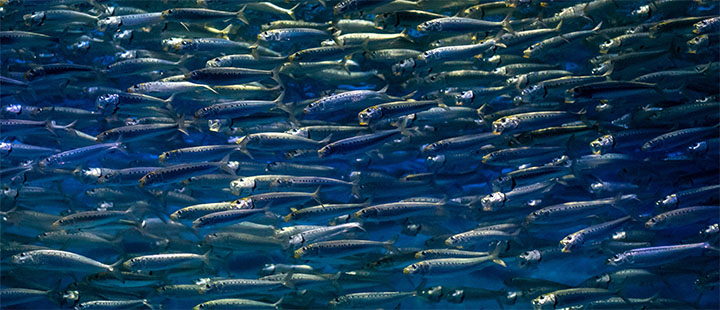
Monterey Bay, in northern California, is beautiful both above and below the waterline. It includes one of North America’s largest deep ocean canyons and extensive kelp forests. Winds blowing warm water away from the coast also allow colder nutrient-rich water to rise from the deep sea to the surface. All this supports remarkable marine biodiversity.
So we expected our most recent round of eDNA testing there to show some exciting results – and it did. Some 41 species were identified including some of the Bay’s most iconic and ecologically significant inhabitants. We found traces of Northern right whale dolphins and of humpback whales, which are annual migrants along the Pacific coast. eDNA from Orcas, several dolphin species, sea lions and seals, along with many other species, provided evidence of a robust food web. The presence of sea otters, a keystone species which plays a vital role in managing the kelp forest, was also reassuring.
Monterey Bay sampling was supported locally by Francisco Chavez from the Monterey Bay Aquarium Research Institute (MBARI). “These results highlight how resilient and biologically rich Monterey Bay still is. Finding eDNA from whales, sea otters and multiple dolphin species shows that the Bay continues to support a healthy food web. This kind of information helps us understand how the region is responding to climate change and how we can better protect its ecological balance.”
“What this programme shows is that high-quality nature data and private finance no longer need to operate in separate worlds. The Deutsche Bank projects are a powerful example of what's possible when financial institutions commit to this kind of long-term, science-based engagement with nature. This blueprint scales to new geographies, including in Monterey Bay, and it creates a real foundation for channelling capital towards the ecosystems that need it most.” Dr Molly Clavey, Nature Impact Lead, NatureMetrics.
Deutsche Bank is running a multi-location eDNA sampling programme in partnership with the SailGP Germany team and NatureMetrics. eDNA, or environmental DNA, is identified by analysis of water samples. Our recent eDNA survey locations have included New York, Sydney, Alaska and San Francisco. Results from our upcoming eDNA testing in Rio de Janeiro and Sassnitz will follow in the coming months.
“Every sample we collect builds on our understanding of how marine ecosystems function – and how they are being reshaped,” says Markus Müller, Deutsche Bank Private Bank’s CIO for Sustainability. “Monterey Bay shows us the richness of life beneath the surface of the ocean, and how science-based methods like eDNA can help us protect it.”