May 13, 2024
Allocating to Asia amid AI, ESG and Geopolitics
At Deutsche Bank’s first Emerging Markets Family Office Forum, family office investors ranked Asia as their preferred region for asset allocation in the next three years, even amid rising geopolitical risk
Family Offices from Asia and the Middle East plan to increase their asset allocation to Asia (excluding China) in the next three years, according to a poll taken at Deutsche Bank’s Emerging Markets Family Office Forum, held in Singapore last week.
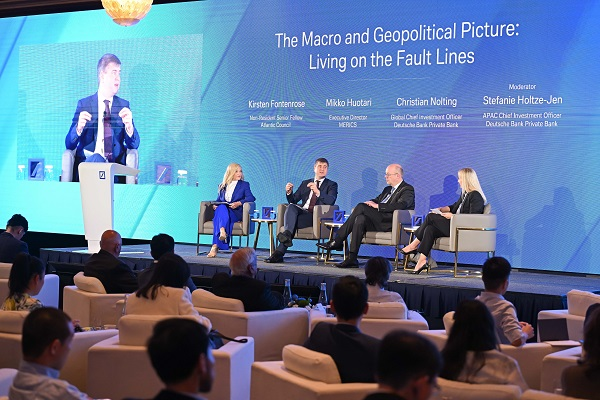
Private Bank’s Emerging Markets franchise hosted the Family Office Forum where panel discussions ranged from rising geopolitical risk, to investment strategies for permanent capital, private credit, global real estate, as well as creating timeless legacies with art.
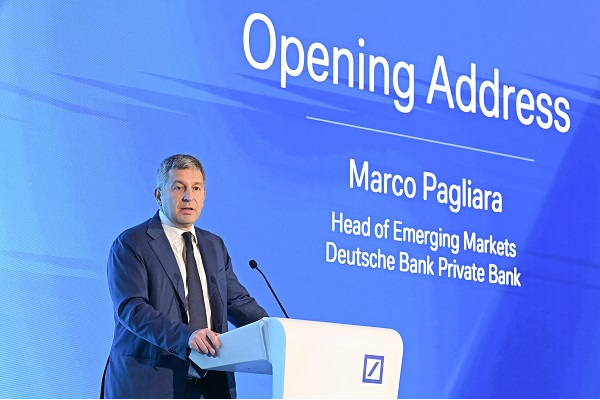
Deutsche Bank Private Bank Head of Emerging Marco Pagliara said: “We are delighted by the enthusiastic reception for our inaugural EM family office forum. In the burgeoning Asia – Middle East corridor of investment and growth, we are committed to supporting family offices make connections and seize investment opportunities.”
Commenting on Deutsche Bank’s accomplishments, Euromoney publishers said: “Coming away with 15 awards, Deutsche Bank was among the top five financial institutions in terms of individual wins in Euromoney's 2024 Global Private Banking Awards. It achieved its position after impressing judges and the internal panel through its commitment to enhancing its private banking offering and by demonstrating impressive financial performance and market share.”
Investment returns and asset classes were widely discussed during the forum. Directly owned real estate in Asia was voted a preferred asset class, and the segment attracting most interest from family offices is data centres and AI related infrastructure.
Panelists also discussed the risk/ return opportunity with private credit, risks related to environmental issues and the growing need to embed Environmental, Social and Governance (ESG) considerations into portfolios.
More than 100 family office representatives from Southeast Asia, North Asia, Greater South Asia and Middle East attended the forum over two days, representing ultra-high net worth individuals and their families. Many guests travelled from as far afield as Europe, the Middle East and the US, as well as within Asia.
The event began with a welcome dinner at Singapore’s National Gallery where world renowned international art curator Dr. Amin Jaffer discussed creating timeless legacies with art with Private Bank Vice Chairman Salman Mahdi.
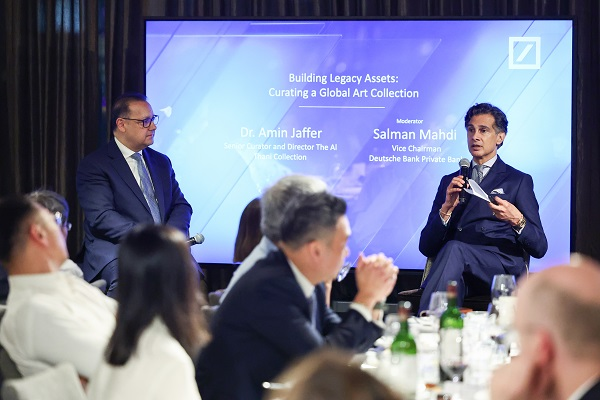
Dr. Jaffer is responsible for The Al Thani Collection, exhibited at the Hôtel de la Marine in Paris, for the emir of Qatar’s family.
Describing the transformative role art can play in society, Dr. Jaffer said art can speak many languages without the need of any translator and can be “a uniting force between cultures".
Other guest speakers at the forum included international affairs experts Mikko Huotari and Kirsten Fontenrose, who discussed rising geopolitical tensions with the EU, the US, Middle East, Russia and China.
Family office investors Angela Huang, Arvind Khattar, Lin Shi, Sean Low, Christina Gaw, and Muhannad Abdulhasan shared their investment insights and experiences in panels with Deutsche Bank experts Christian Nolting, Amit Khattar, Raheman Meghji, and Saydam Salaheddin.
The Emerging Markets Family Office forum is the most recent addition to Deutsche Bank’s global Family Office forum series. This week in London the Private Bank hosts the annual Family Office Conference, and in September the annual Family Office Symposium will be held in Frankfurt for family offices in Germany.