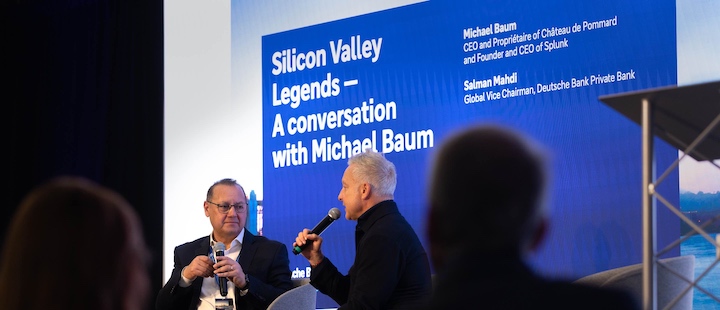
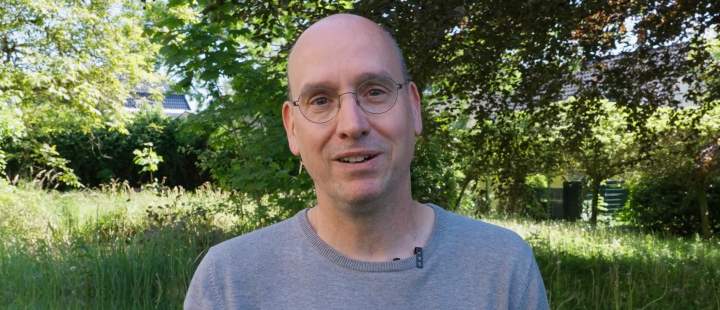
As part of our Senior Leadership Conference, Zita Cobb talked about why doing the profitable thing and doing the right thing are not mutually exclusive—and why the health of the ocean touches us wherever we live.
Click here to activate this content.
After a successful career in energy and technology, the Canadian businesswoman set her sights on giving back to her community. The following interview transcript has been edited for length and clarity.
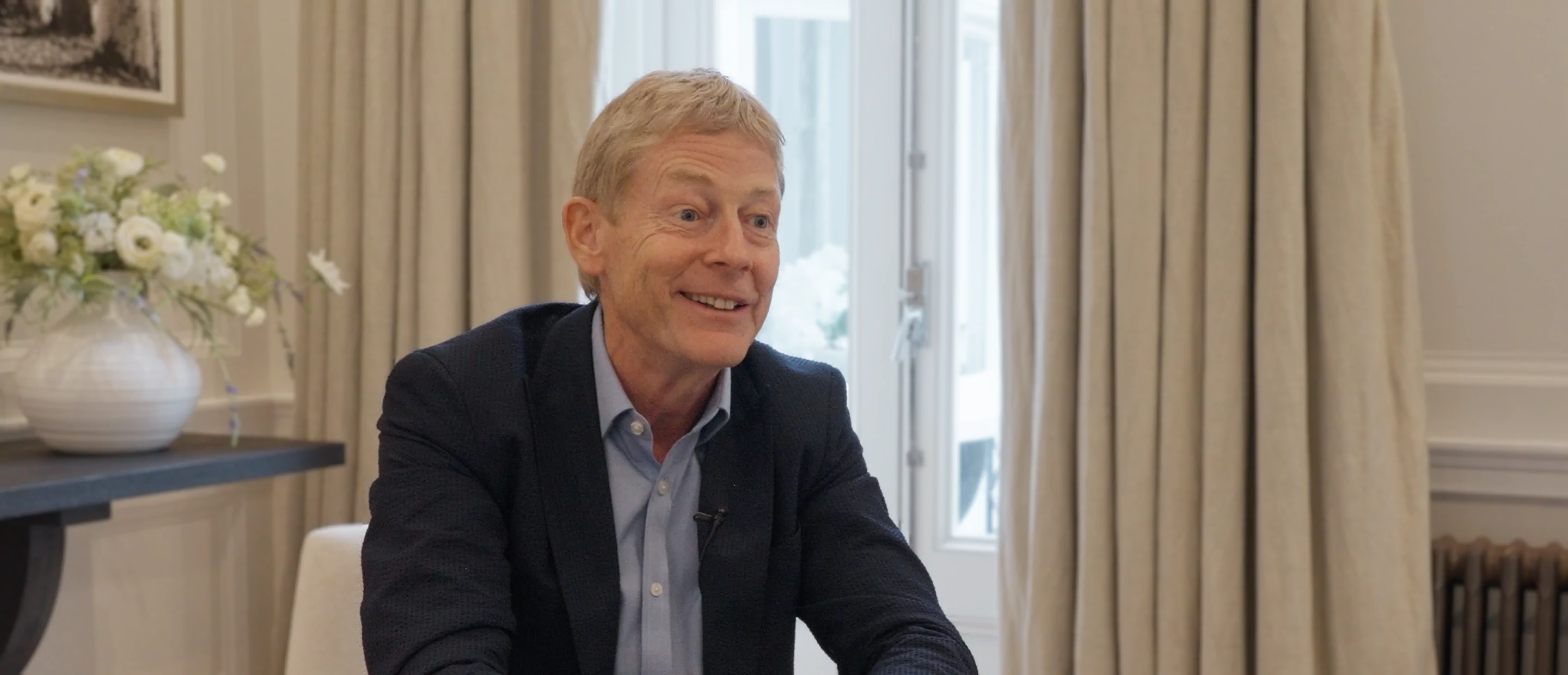
Zita Cobb: The short version of my personal story is that I'm 64 years old and I have lived in three centuries. And I'm not a vampire because, until I was ten, I lived in the 19th century on an island called Fogo Island (which is off the northeast coast of Newfoundland and Labrador, which is the East Coast of Canada), and we were fishing people. It's hard to believe it was Canada at the time because we had no electricity and no running water. We had very little contact with the mainland. We were a pretty self-reliant society that fished for cod, salted the cod and traded them at the end of the season.
The 20th century arrived in the form of the industrialisation of the fishery, and the cod stocks collapsed almost overnight. And that has probably shaped everything about how I see the world. I studied business in Central Canada, in Ottawa, and my career was mostly in wave division multiplexing, which are the little optical components that have enabled the digital age. So that was the 21st century.
Deutsche Bank: The United Nations recently agreed on the High Seas Treaty on the conservation and sustainable use of the ocean, but it still must be ratified. What does the treaty mean to you and communities like yours?
This is long overdue and super important and we’re at the beginning of something, so it has to get ratified. Otherwise, what’s going to happen to us humans if we don’t figure out our relationship with the ocean? Until we can get international agreements around good behaviour with the ocean, it's going to be a tough uphill battle and it means everything. In a landlocked city like Frankfurt, you're still connected to the ocean and absolutely everything that we do, no matter where we do it, the consequences of that end up in the ocean.
Are you hopeful that humanity, that our governments can ratify this and make a difference?
I think we absolutely can. We just have to decide. It's as simple as that. And I think when we are going about it, I think we need to stop this kind of grandstanding with each other. It's where I say to you, “I'm only going to do the right thing if you do the right thing”. No, no, I'm going to do the right thing and maybe that'll inspire you or call you out forward with me.
We haven't had the most effective architectures for collaborating internationally and we haven't had the best behaviours. But I think we've learned from some of those failures. And so yeah, I think we'll get it right. Let's hope so. And let's make it so.
What led to your decision to refocus on helping your community on Fogo Island after a career as an entrepreneur in technology?
I think there's this kind of mythology around the entrepreneur that they’re someone who falls out of the sky on a blue moon or something. I don't think so. I think we have entrepreneurial communities that give rise to entrepreneurs. And so even though we didn't have money, every single person that I knew growing up was an entrepreneur, because we figured out how to make a living on the North Atlantic.
One thing I did see in my career that was disturbing because I worked around the world was the diminution of communities. We need to do something to strengthen human communities and where would I start if not at home? We had adapted over the years on Fogo Island to different species of fish. The cod are slowly coming back, and I became super interested in how do we make different kinds of markets that will drive different behaviour with cod as they come back? Because I think we undervalued them. And if we continued with that kind of behaviour, we'd decimate them again. Finding the right design of markets is really key to shaping our behaviours.
A theme for our Senior Leadership Conference is striving for excellence. For our bankers, how would you envisage that they do that?
We start with the question, what are we optimizing for? If we’re only optimizing for financial growth then you know that’s a blood sport. You can just go out and find as many customers wherever they are and do whatever you have to do to get the business. I haven’t been here at Deutsche Bank very long, but I don’t get a sense that that’s really what the plan is.
I think that humans are coming up to a big reckoning around how we live together, how we have a different relationship with nature whether it’s the ocean or how we’re going to wrestle with carbon. All these big questions are very real and very present, and I think the spirit of what needs to happen has arrived. So I think for a banker, wherever they are in the network of Deutsche Bank locations, it’s about the relationships in that place and being able to lead by demonstrating that we can reconcile the relationship between or among nature and culture and money because that’s a very fundamental thing.
So, invest in relationships. I think in the business world we are too preoccupied sometimes with the competition and watching what they're doing. The answers for excellence are in us. They're in the history of this organisation and in the whatever 83,000 people that work here and each and every one of them have a lot to give. How do we do this? These are these are big challenges. If not Deutsche Bank, then who is going to lead this?
Are you optimistic that the banking industry can be an agent of positive social change?
I am. I never use the word optimistic because it makes it sound like I can just sit here and just be optimistic. I personally am intentional. And I think when we are intentional, we get things done.
This interview with Zita Cobb took place on the sidelines of Deutsche Bank's Senior Leadership Conference in March 2023, where she was a keynote speaker.