Ocean entrepreneurship: how to build scalable businesses in the blue economy
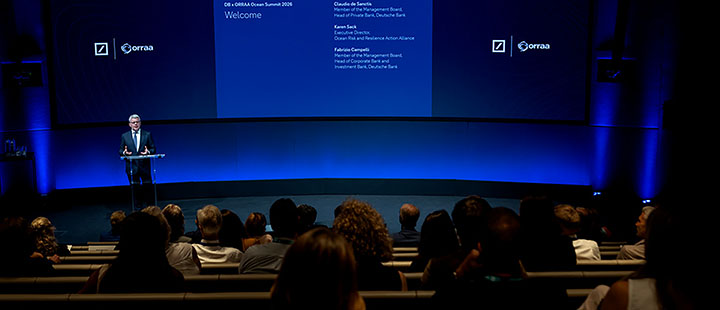
At the Deutsche Bank and ORRAA Ocean Summit in London, speakers discussed potential opportunities and challenges in the blue economy.

While valuing nature – and particularly the Ocean’s economic contribution – remains challenging, entrepreneurs are scaling innovative businesses that protect marine ecosystems and unlock benefits for humanity.
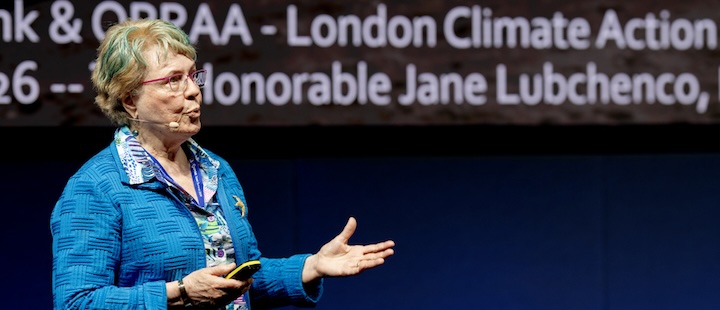
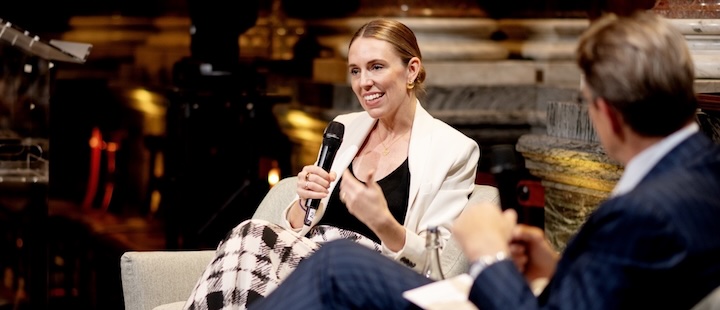
Entrepreneurship that supports ocean sustainability begins with a fundamental challenge: the economic value of nature remains largely unpriced. This market failure shaped the discussion between Ruth Davis OBE, UK Special Representative for Nature, and Markus Müller, Chief Investment Officer for Sustainability, Deutsche Bank Private Bank.
“There’s a big gap in being able to fully value the services that nature provides to the economy,” Davis said. The problem is particularly acute for the Ocean due to their complexity and difficulties in gathering information, she argued.
Davis highlighted a second barrier: investors often struggle to connect with a pipeline of projects that match their return expectations. This issue is amplified by the diversity of ocean-related sectors and the difficulty of developing institutional structures to “drive money down to small and medium-sized enterprises”.
The Ocean is a living system upon which we depend. But it’s also a superhighway and an energy generator, so we need to embrace its complexity and recognise that it’s also an economic system.
Ruth Davis, OBE
UK Special Representative for Nature
A lack of mechanisms for funding “nature as infrastructure” represents a third gap. Davis stressed, however, that stewardship of the Ocean should be driven not by altruism but by shared geopolitical, economic, and security interests.
When capital does reach communities, the results can be transformative. In Vanuatu, she saw “spectacular” marine reserves supported by local fishers that were helping the Ocean “come back to life” and strengthening livelihoods.
“The Ocean is a living system upon which we depend. But it’s also a superhighway and an energy generator, so we need to embrace its complexity and recognise that it’s also an economic system,” she stated.
Founder stories from the sustainable blue economy
Founders of four businesses and enterprises that aim to support ocean sustainability shared their experiences of seeking the funding to scale. These companies are tackling critical issues ranging from renewable energy and human health to food and financial security, noted moderator Karen Sack, Executive Director, Ocean Risk and Resilience Action Alliance (ORRAA).
Venture capital, angel investing, concessional capital and impact finance were all cited as sources of funding over the previous 12 months. For Ocean Bottle, a consumer impact brand that supports plastic collection initiatives, patient capital from a family office has been invaluable, helping the company achieve a ten-fold increase in plastic removal over the past four years.
“Fundraising is tough,” said Will Pearson, Co‑Founder and Chief Executive Officer. “But we’ve been lucky to find value‑aligned investors who care about the impact we want to deliver.”
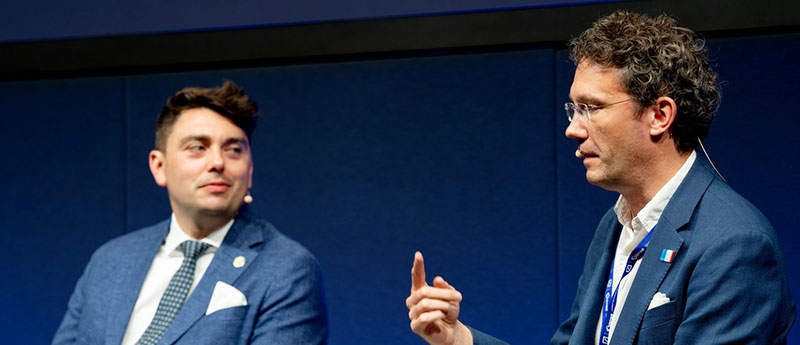
Adam Root, Founder and CEO of Matter, and Ben Medland, Founder and CEO of DRIFT Energy.
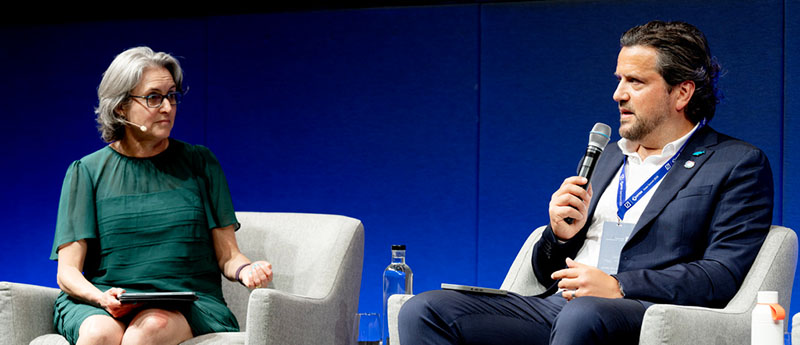
Karen Sack, ORRAA's Executive Director, and Dr Serge Raemaekers, Executive Director of ABALOBI.
DRIFT Energy is developing vessels that produce green hydrogen at sea, stated Founder and CEO Ben Medland. RINA has awarded the company what it describes as the first Approval in Principle for this type of ship, while DRIFT has reported an orderbook of more than 30 vessels. Seeking large infrastructure capital helped the company start thinking as an infrastructure platform rather than simply the developers of an unconventional vessel, Medland added.
Adam Root, Founder and CEO of Matter, described how his company combines consumer adoption with textile-sector contracts for its microplastic filtration technology. He said Matter is on a mission to prevent 15,000 tonnes of microfibre pollution from entering our oceans by 2030. This is part of a wider challenge, with the textile industry contributing more than 160,000 tonnes of microfibre pollution each year1.
Its consumer washing‑machine filter is expected to be available in more than 20 countries by the end of 2026 while significant investment from Inter IKEA Group2 – a brand Root credits with “intergenerational thinking” – has boosted its plans for the textiles industry.
Discussion turned to how to measure impact. Data‑led reporting provides credibility for investors, clients and policymakers.
To address scepticism about real‑world impact, Pearson described how Ocean Bottle developed a track‑and‑trace dashboard that shows customers exactly where impact occurs.
As well as generating renewable energy from the deep ocean, DRIFT’s vessels underpin emissions trading schemes, said Medland.
Dr. Serge Raemaekers, Executive Director of ABALOBI, explained how the South African-based social enterprise uses data tools to support small fishing communities with market access and moving towards sustainability.
With food security as its starting point, it now works with 10,000 fishers internationally and focuses its impact measurement on economic value retention. This encompasses the benefits for the whole community and supply chain, including women in quality control positions.
Banking that aims to support the ocean: our commitment
Deutsche Bank’s ocean work is anchored in its partnership with ORRAA, which Jörg Eigendorf, Chief Sustainability Officer, said “has fundamentally changed our thinking.” With limited banking regulation related to the Ocean, corporate guidelines are vital.
Eigendorf described the bank’s commitment to ORRAA’s #BackBlue initiative, which strengthens its approach for ocean-related financing by introducing enhanced due diligence requirements for ocean-related activities.
He echoed Ruth Davis’s point about market failure, warning that ocean finance falls well below the 175 billion US dollars required annually3. Blue bonds and blended finance structures offer one way to respond but a need for more “scalable instruments” remains.
Ocean protection may appear in policies and commitments, but true operationalisation comes through pricing risks and opportunities, he said. Data and impact measurement are essential. As Eigendorf put it: “What we cannot measure — and cannot price — we cannot manage.”
References
Matter, "Earthshot 2025 Finalist Matter receives backing from Inter IKEA Group to combat microfibre pollution", November 2025.
Matter, "Earthshot 2025 Finalist Matter receives backing from Inter IKEA Group to combat microfibre pollution", November 2025.
Deutsche Bank, "Why a healthy ocean costs 175 billion US dollars a year … and why that’s a bargain", June 2021.

Event report
Ocean Summit 2026: deep currents – the forces moving our world
Deutsche Bank and ORRAA convened leaders from finance, policy, science and entrepreneurship in London on June 23 to explore the forces reshaping ocean resilience, blue finance and the blue economy.