The Human Current: collaboration, advocacy and influence – catalysts of change
Deutsche Bank and ORRAA’s Ocean Summit 2026 examined the human dimension of ocean resilience and why action to tackle the climate crisis is more necessary than ever.

Many nations – particularly in the Global South – are already facing rising sea levels, flooding, as well as more frequent and powerful storms, despite contributing relatively little to the causes of global warming.
“The Ocean is central to the climate agenda but also deeply personal for the communities closest to it,” said Karen Sack, Executive Director of the Ocean Risk and Resilience Action Alliance (ORRAA).
Speakers at the Ocean Summit noted that countries often labelled “vulnerable” can face financing conditions that make climate adaptation harder, even as they sit on the frontline of climate change.
“The world must stop seeing ‘big ocean states’ only through the lens of vulnerability,” urged His Excellency Surangel S. Whipps Jr, President of the Republic of Palau. “See us instead as strategic partners in building a resilient global economy. Pacific Island nations are not asking to be rescued. They are asking you to acknowledge and invest in the critical global services that we provide.”
Dialogue is necessary, but it is not sufficient. Action must follow – at the pace and scale required – because there can be no thriving economy without a thriving planet.
Dame Amelia Chilcott Fawcett, OBE
Co-Chair of International Advisory Panel on Biodiversity Credits, Non-Exec Director, State Street Corporation
The Honourable Shirley Botchwey, Commonwealth Secretary-General, argued: “Too many of these countries continue to feel locked out of the decisions and finance that shape their future.”
She added: “This rupture did not begin yesterday. It reflects a deeper drift in which too many nations and communities have felt that global systems were not built with them in mind; that cooperation was not translating into opportunity, resilience, security or dignity. Today, that unresolved challenge, that contradiction, has become the defining factor that weighs down the economic prospects of both rich and poor countries.”
Turning ocean resilience commitments into action
The Right Honourable Dame Jacinda Ardern, former Prime Minister of New Zealand, also connected climate action with financial security. “We should be both addressing the climate crisis and the very real financial insecurity people face, because those things are actually starting to bump up against each other as well,” she said.
“Unless you can fully understand the abundance of your ocean and that abundance is properly measured, not just captured by commercial interests in that measurement, then everything falls over.”
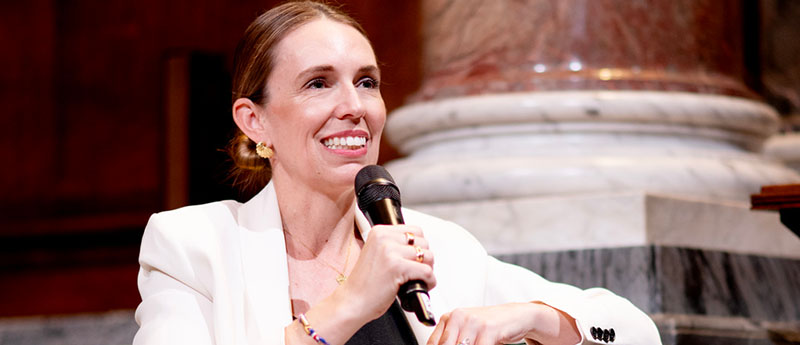
The Right Honourable Jacinda Arden, former Prime Minister of New Zealand, discusses the importance of ocean conversation.
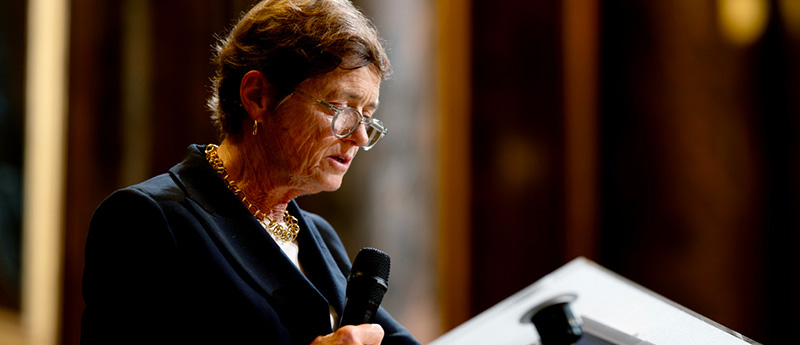
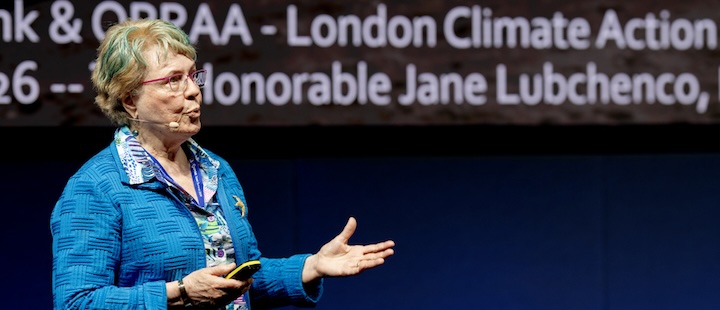
Dame Amelia Fawcett, OBE, Co-Chair of the International Advisory Panel on Biodiversity Credits, speaking at the Deutsche Bank and ORRAA Ocean Summit 2026.
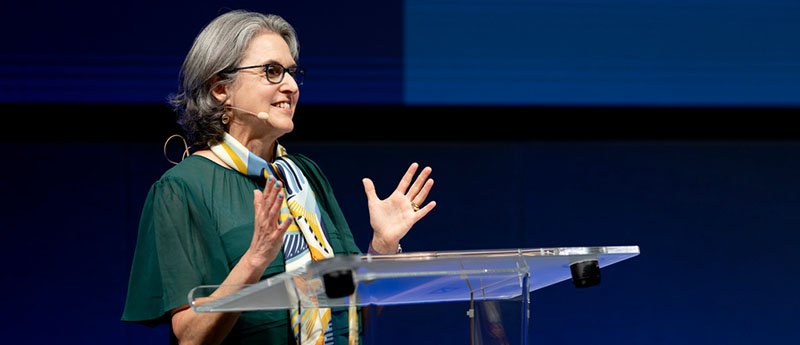
Karen Sack, ORRAA's Executive Director, explains why the Ocean is central to the climate agenda and communities.

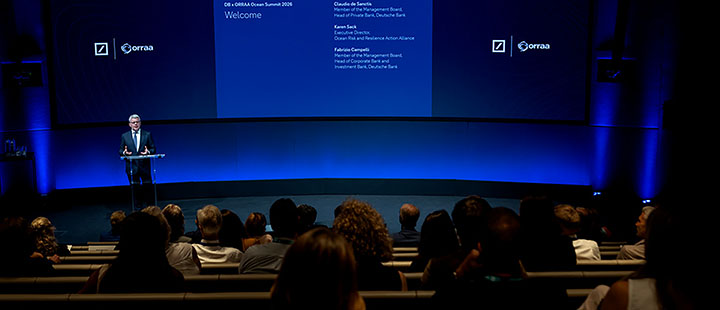
Claudio de Sanctis, Head of Deutsche Bank Private Bank, outlines the role financing institutions can play in ocean conservation.
Ardern also underlined the role financial institutions can play, noting the need to demonstrate “that there are financial imperatives and something to be lost through stranded assets if we don’t start changing the way we invest as well.”
Throughout the summit, a core theme emerged: how the focus must now shift from dialogue to delivery – mobilising capital, building scalable frameworks and translating insight into measurable outcomes.
As Dame Amelia Fawcett, Co-Chair of the International Advisory Panel on Biodiversity Credits, stated: “Dialogue is necessary, but it is not sufficient. Action must follow – at the pace and scale required – because there can be no thriving economy without a thriving planet.”
How can banks help tackle the ocean crisis?
The role of a banking institution in tackling the ocean crisis can be put in simple terms, said Claudio de Sanctis, Member of the Management Board and Head of Deutsche Bank's Private Bank. “We are not conservationists, we’re not marine biologists, nor weather experts, we’re bankers."
He continued: “We focus on three fundamental points where we think we can add value: education, advocacy, and bringing capital to bear. Ultimately, in order to really be effective, you need capital. You need to deploy capital.”
For much of the world’s population, ocean conservation remains an intangible concept. “It is difficult to protect something that people do not know or understand,” said de Sanctis. “The vast majority [of people] have never had the chance to put their head beneath the surface and see the Ocean from within, they only see it from the outside.”
The task ahead is no small feat. Although positive change is underway, there remain many headwinds. In June 2026, global ocean surface temperatures broke records once again, exceeding 20ºC, as we enter “uncharted territory”, according to the Copernicus Climate Change Service1.
How ocean degradation impacts everyone on the planet
The effects of a warmer ocean are wide-reaching. From rising sea levels and melting ice caps to stressed ecosystems and potential flooding, the consequences could be dire for countless communities around the world. Marine heatwaves are also on the rise, increasing in frequency and severity, devastating ecosystems. A recent marine heatwave event in Panama saw around 75 percent of coral diversity wiped out2.
According to the UN, over three billion people directly depend on marine and coastal biodiversity for their livelihoods3. But everybody on the planet depends on the Ocean for climate regulation, food, and supporting economies – it is Earth’s largest and most essential ecosystem. And it is in crisis.
Human activity is accelerating ocean acidification, declining fish stocks, and rising pollution, leading to a catastrophic decline in biodiversity with over half of marine species at risk of extinction by the end of this century4. Ocean degradation is a global threat.
“We can, and we must, have the technical conversations. But in the end, it all comes down to people,” said Botchwey, reflecting on the impact of climate change and ocean deterioration.
She brought that human dimension into sharper focus: “The fisher repairing nets before dawn; the family watching the sea move closer to the graves of their ancestors; the fisher and the insurer grappling with how to protect boats destroyed season after season by hurricanes; the entrepreneur creating clean energy from the tide; and the mother wondering whether the next storm will take her home, her school, her clinic and her children’s future. When we speak about the Ocean, [the conversation] must begin and end with them.”
References
Copernicus Climate Change Service, “Copernicus Marine and Copernicus Climate Change: Daily global sea surface temperatures break records for the time of year”, July 2026.
UN Development Programme, “Sustainable ocean economy is a human development imperative”, June 2025.


Event report
Ocean Summit 2026: deep currents – the forces moving our world
Deutsche Bank and ORRAA convened leaders from finance, policy, science and entrepreneurship in London on June 23 to explore the forces reshaping ocean resilience, blue finance and the blue economy.